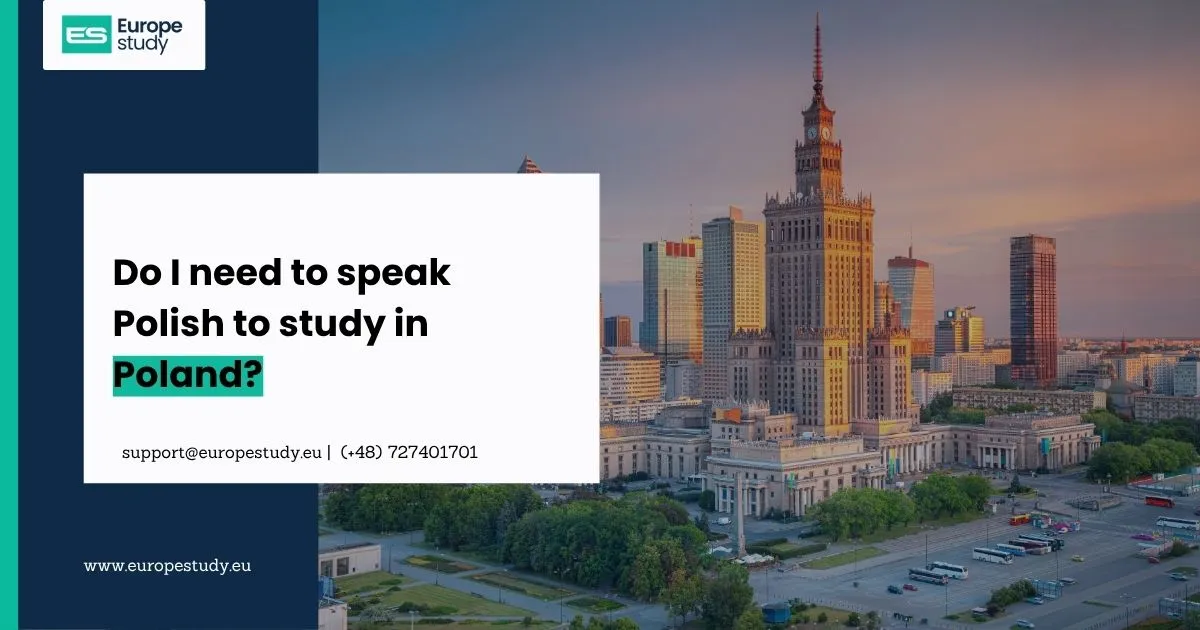
Do I need to speak Polish to study in Poland?
Poland has become one of Europe’s most popular education destinations for international students. Affordable tuition, high-quality universities, and globally recognized degrees make it an excellent choice.
But one of the most common questions students ask before applying is:
Do I need to speak Polish to study in Poland?
The short answer is — not necessarily, but learning some Polish can help you in many ways. Let’s break it down.
1. Studying in Poland Without Knowing Polish
Poland offers hundreds of degree programmes in English, especially at major universities in cities like Warsaw, Kraków, Wrocław, and Gdańsk.
You can study entirely in English in fields such as:
-
Business and Management
-
Computer Science and IT
-
Engineering and Technology
-
Medicine and Nursing
-
International Relations
-
Tourism and Hospitality
As long as you meet the English-language requirements, you can study comfortably without speaking Polish.
2. English-Taught Programs in Poland
More than 400 Polish universities offer English-medium programs at Bachelor’s, Master’s, and PhD levels.
Examples of universities with English-taught degrees:
-
University of Warsaw
-
Jagiellonian University (Kraków)
-
Warsaw University of Technology
-
Poznań University of Medical Sciences
-
Gdańsk University of Technology
Each university lists its English-language courses on its official website, along with entry requirements.
3. Language Requirements for Admission
If your course is in English, you will need to prove your English proficiency. Most universities accept:
-
IELTS (usually 6.0 or higher)
-
TOEFL (minimum 80–90 iBT)
-
Cambridge English Certificates
-
Medium of Instruction letter (if your previous education was in English)
Polish language certificates are only required if you apply for programs taught in Polish.
4. Studying in Polish – Optional but Advantageous
While English programs are growing, many public universities still teach in Polish, especially in medicine, arts, and humanities.
If you plan to study in Polish:
-
You’ll need at least B1/B2 level in the Polish language.
-
You may be asked to pass a language proficiency test or attend a preparatory language course.
Learning Polish also allows you to pay lower tuition fees in some cases, since many public universities charge less for local-language programs.
5. Benefits of Learning Polish While Studying
Even if your classes are in English, learning basic Polish can significantly improve your daily life.
It helps you:
-
Communicate in shops, transport, and public offices
-
Build friendships with local students
-
Access part-time jobs or internships
-
Understand Polish culture and customs better
Many universities offer free or discounted Polish language courses for international students — a great opportunity to improve your integration.
6. Working While Studying in Poland
International students can work part-time while studying, even without Polish skills, especially in international companies or English-speaking workplaces.
However, for certain fields such as hospitality, customer service, or healthcare, basic Polish may be preferred or required by employers.
Therefore, learning the language can open more job opportunities after graduation.
7. Life in Poland Without Speaking Polish
You can live comfortably in major Polish cities using English, as many young people speak it well.
But in smaller towns or administrative offices, knowing basic Polish phrases will make daily tasks easier — such as opening a bank account, registering your residence, or visiting a doctor.
8. Post-Graduation Opportunities
After completing your studies, you may want to stay and work in Poland.
Many international graduates are offered positions by local companies. While some jobs are open to English speakers, proficiency in Polish often gives candidates a stronger advantage and long-term career growth potential.
Key Takeaways
-
You do not need to speak Polish to study in Poland if your program is in English.
-
You’ll need an English-language certificate like IELTS or TOEFL for admission.
-
Learning basic Polish improves your experience, communication, and job prospects.
-
Major universities provide language courses for international students.
-
Knowing Polish can help reduce tuition fees and support post-study employment.
FAQs
1. Can I study in Poland in English only?
Yes. Many universities offer full programs in English at Bachelor’s, Master’s, and PhD levels.
2. Is Polish required for visa or residence permits?
No, but learning Polish can help with residence registration and local communication.
3. Can I find a part-time job in Poland without speaking Polish?
Yes, especially in multinational companies or service jobs in big cities.
4. How can I learn Polish easily as a student?
Most universities offer free or low-cost language courses. You can also use apps or join local community classes.
5. Does knowing Polish reduce tuition fees?
In some public universities, yes — Polish-taught programs are often cheaper than English-taught ones.