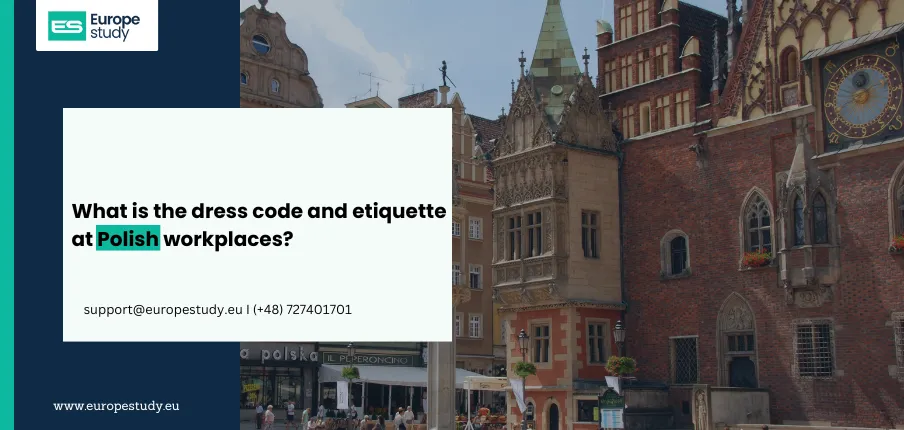
What is the dress code and etiquette at Polish workplaces?
Polish workplaces balance professionalism with a growing appreciation for flexibility and individuality. While dress codes and etiquette may vary depending on industry and company culture, certain standards are widely observed and expected across the country.
Whether you're preparing for your first job in Poland or planning to expand your career internationally, understanding workplace etiquette and appropriate attire will help you integrate more smoothly and make a strong professional impression.
1. General Workplace Culture in Poland
Poland's workplace culture is formal and hierarchical, especially in more traditional industries such as finance, law, or government. However, in creative sectors and international companies, a more relaxed and collaborative environment is common.
Key features of Polish professional culture include:
- Respect for authority and seniority
- Punctuality
- Clear communication
- Modesty and professionalism in behavior and appearance
Politeness, humility, and attention to detail are appreciated in professional settings. First impressions count, so how you present yourself matters.
2. Business Dress Code in Poland
Traditional Industries (e.g., law, banking, corporate offices)
A formal dress code is typically expected:
- Men: Dark-colored suits, button-up shirts, conservative ties, and polished shoes.
- Women: Business suits (pants or skirts), blouses, modest dresses, and closed-toe shoes.
Avoid overly bright colors, bold patterns, or casual accessories. Neat grooming and a clean appearance are essential.
Modern Industries (e.g., tech, marketing, startups)
A more business casual or even casual dress code may be acceptable, especially in younger or international companies:
- Men: Collared shirts or polos, chinos or dark jeans, and clean shoes.
- Women: Blouses, smart tops, casual dresses or skirts, and flats or low heels.
Despite the relaxed environment, looking tidy and put-together is still expected.
Creative Fields (e.g., design, media, fashion)
These industries allow for more personal expression in clothing, though the basics of professionalism still apply. Cleanliness, intention, and context (e.g., client meetings vs. in-house work) influence the choice of dress.
3. Dress Code for Specific Situations
Job Interviews
Regardless of the company’s internal dress code, it is best to dress formally for interviews. Polish employers value professionalism and take first impressions seriously.
Client Meetings
Even in casual workplaces, meeting clients usually calls for more formal attire. Choose conservative, neutral outfits that communicate reliability and respect.
Company Events
For internal events like team-building outings or company parties, smart casual attire is often appropriate. For formal dinners or corporate gatherings, business formal or semi-formal wear may be required.
4. Etiquette in Polish Workplaces
Beyond dress, here are some core etiquette principles to observe:
Punctuality
Arriving on time is a sign of respect. Being late without notice is viewed as unprofessional.
Communication
- Start conversations with a polite greeting.
- Use professional titles (Mr., Mrs., or job titles) unless invited to use first names.
- Written communication should be clear, polite, and grammatically correct, especially when emailing colleagues or supervisors.
Respect for Hierarchy
Many Polish companies operate under a traditional hierarchy. Decisions often come from the top, and seniority is respected. Interrupting or openly disagreeing with a superior in public settings is frowned upon.
Work-Life Boundaries
While Polish professionals work hard, personal time is valued. Avoid contacting colleagues after hours unless it’s urgent or agreed upon.
5. Gender and Cultural Considerations
Dress codes are generally more conservative for women in formal settings, though this is changing in more progressive and international companies. Gender equality is increasingly emphasized, but traditional expectations may still persist in some industries or regions.
Foreign workers are welcomed, especially in larger cities, but showing respect for Polish customs—such as dressing appropriately and following local etiquette—builds trust and credibility.
Conclusion
Understanding the dress code and workplace etiquette in Poland is an important step in making a positive impression and succeeding in your career. While trends may differ across sectors, a common theme is professionalism, modesty, and respect.
Whether you're heading into a job interview, your first day at the office, or a company event, dressing appropriately and behaving with cultural awareness will help you fit in and stand out for the right reasons.