Can blue-collar jobs in Poland lead to PR?
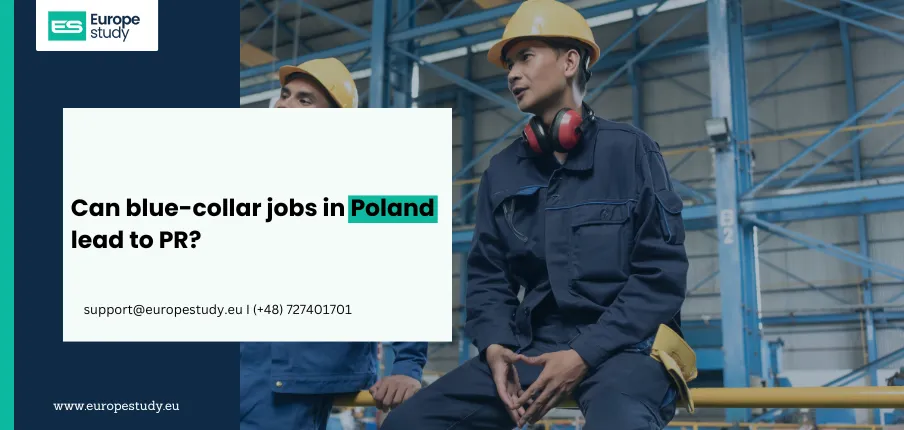
When people think of settling in Europe, they often associate permanent residency (PR) with highly skilled professions like IT, engineering, or finance. However, Poland is steadily breaking this stereotype by offering blue-collar workers a realistic path to long-term settlement. If you're a forklift operator, warehouse assistant, food delivery driver, or factory worker considering work in Poland, this post is for you.
Let’s explore how blue-collar jobs can lead to permanent residency in Poland, and what you need to know about the process.
Understanding the Basics: What is Permanent Residency in Poland?
Permanent residency (PR) in Poland allows a non-EU citizen to stay indefinitely and enjoy almost all the rights of Polish citizens (except voting). A PR holder can:
-
Work without needing a separate work permit
-
Access public healthcare
-
Apply for long-term EU residency later
-
Eventually qualify for Polish citizenship
But getting PR isn’t automatic—you need to meet specific conditions.
Step-by-Step Path from Blue-Collar Job to PR
1. Obtain a Legal Work Permit
Your journey begins with securing a valid work permit through a registered employer. Poland offers several types of permits, including:
-
Type A: For foreigners employed by a Polish company
-
Type B: For board members living in Poland
-
Seasonal or temporary permits (usually for 6–12 months)
Blue-collar workers typically get a Type A permit. The key is ensuring your employer is legitimate and that your contract is officially registered.
2. Get a Temporary Residence Card
Once in Poland, you need to apply for a Temporary Residence Permit (Karta Pobytu). This card allows you to stay in Poland for longer than 90 days. It's usually issued for up to 3 years.
To qualify, you must prove:
-
You have a legal work contract
-
You earn enough to support yourself (at least minimum wage)
-
You have health insurance
You can keep renewing this card as long as you maintain legal employment.
3. Maintain Continuous Legal Stay
This is where patience matters. To apply for permanent residency, you generally need to live in Poland legally and continuously for at least 5 years. If you hold a long-term EU residence permit, you may apply earlier depending on circumstances (like being a spouse of a citizen).
This stay must be legal, uninterrupted, and based on a residence card—not tourist visas or short-term stays.
4. Meet Additional Requirements for PR
Once eligible, you can apply for PR if:
-
You’ve lived in Poland for 5+ years legally
-
You have a stable income and secure housing
-
You speak basic Polish (A2 level or higher)
-
You’ve integrated into Polish society (employment, taxes, no criminal record)
Your job type (blue-collar or white-collar) does not matter—what counts is legal stay, stable income, and integration.
Common Questions
Do blue-collar salaries meet the income requirement?
Yes, most full-time blue-collar jobs pay at or above Poland’s minimum wage, which is enough to meet the income requirement for residency.
Is there discrimination against blue-collar workers in the PR process?
No. Polish immigration law does not differentiate based on occupation. As long as your employment is legal and stable, you're eligible.
Can I bring my family later?
Yes, after receiving temporary or permanent residence, you can apply for family reunification under certain conditions.
Final Thoughts
Blue-collar jobs in Poland are not only a means to earn a stable income—they can also serve as the foundation for a long-term life in Europe. With consistent legal employment, documented residence, and basic language skills, you can move from worker to resident—and eventually to citizen.
For many non-EU nationals, Poland offers an accessible, affordable, and realistic path to permanent residency—even from humble beginnings.