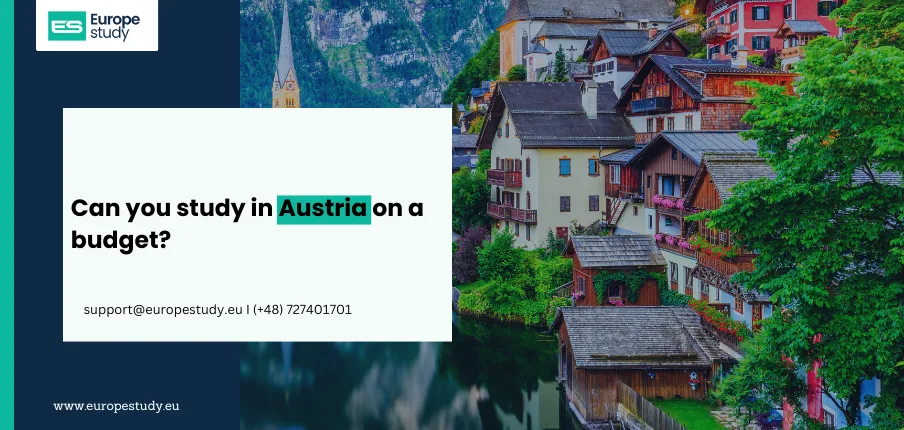
Can You Study in Austria on a Budget?
Austria is well known for its high-quality education, picturesque landscapes, and rich cultural heritage. But a common concern among prospective international students is whether studying in Austria is financially feasible. The answer is yes — with careful planning, it is possible to study in Austria on a modest budget. Here's a comprehensive guide on how to do it.
1. Low or No Tuition Fees
One of the key advantages of studying in Austria is the relatively low tuition fees, particularly at public universities.
Tuition Costs:
-
For students from EU/EEA countries, most public universities do not charge tuition fees. Students only need to pay a small student union and insurance fee each semester.
-
For students from non-EU/EEA countries, tuition is generally around 726.72 EUR per semester, in addition to the student union fee.
-
Some universities offer tuition waivers for students from developing countries, so it's worth checking the specific policies of each institution.
2. Affordable Accommodation
Housing is typically the largest monthly expense for students, but there are several cost-effective options.
Student Dormitories: These range between 250 and 450 EUR per month and are often managed by student organizations like OeAD.
Shared Apartments (Wohngemeinschaft or WG): Shared living arrangements with other students typically cost between 300 and 500 EUR per month, depending on the city and location.
Private Studios: These can range from 450 to 800 EUR monthly and are usually the most expensive option.
Students can explore housing through platforms such as WG-Gesucht, HousingAnywhere, or directly through university accommodation offices.
3. Cost of Living
Apart from rent, other living costs in Austria are relatively moderate when compared to other Western European countries.
Monthly Budget Estimate:
-
Food: 200 to 300 EUR
-
Transport: 30 to 60 EUR
-
Health Insurance: Approximately 60 EUR
-
Phone and Internet: 20 to 40 EUR
-
Leisure and Miscellaneous: 100 to 200 EUR
Total monthly expenses usually fall between 710 and 1,160 EUR, depending on lifestyle and city of residence.
4. Saving on Food
Cooking at home is the most cost-effective way to manage your food budget. Budget-friendly grocery chains like Hofer (Aldi), Lidl, and Spar are widely available. University cafeterias (Mensas) also offer balanced meals at student-friendly prices, typically ranging from 3 to 5 EUR. Local farmers’ markets can be another good source of fresh and inexpensive produce.
5. Scholarships and Financial Aid
Austria offers several scholarships for international students to ease financial pressure.
Popular Scholarships:
-
OeAD Scholarships (for various academic levels and fields)
-
Ernst Mach Grant (for non-EU students)
-
University-specific scholarships and merit-based awards
-
EU-funded programs such as Erasmus+
Students are encouraged to consult grants.at, Austria’s centralized database for scholarships and research funding.
6. Part-Time Work for Students
International students in Austria are allowed to work part-time while studying.
-
Students from outside the EU/EEA can work up to 20 hours per week, usually with a work permit.
-
Common part-time jobs include positions in cafes, restaurants, retail, administrative offices, and private tutoring.
-
The minimum wage in Austria typically ranges between 10 and 12 EUR per hour.
Working part-time can significantly supplement a student’s budget and help cover monthly living expenses.
7. Transportation Discounts
Austria has an efficient public transportation system and offers substantial discounts for students.
-
Many cities provide semester tickets for local transportation at reduced rates.
-
The ÖBB Vorteilscard is a popular student discount card for train travel, offering 50% discounts on national and international routes.
Taking advantage of these options helps reduce travel expenses considerably.
8. Student Perks and Free Activities
Austria offers various perks for students that help cut costs beyond basic living needs. These include:
-
Discounted or free entry to museums, cultural events, and cinemas.
-
Affordable sports and recreational programs organized by universities.
-
Free outdoor activities such as hiking, cycling, and lake swimming, which are easily accessible and popular among students.
Conclusion
Studying in Austria on a budget is not only possible but realistic for most international students. With low tuition fees, affordable housing, access to scholarships, and opportunities for part-time employment, Austria remains an attractive destination for quality education at a manageable cost.
To make the most of this opportunity, students should plan early, explore funding options, and adopt a cost-conscious lifestyle. With the right approach, a world-class education in Austria can be both enriching and affordable.