
How to choose the best country in Europe for studies?
Choosing the best country in Europe for studies is one of the most important decisions an international student will ever make. Europe offers more than 40 countries, thousands of universities, and tens of thousands of degree programmes — and each country has its own language environment, tuition fee structure, visa rules, living costs, job market, cultural character, and long-term settlement pathway. With so many options available, the question of how to choose the best European country for your studies can feel overwhelming. But when you break it down into the right set of factors — your academic goals, your budget, your language ability, your career plans, and your life priorities — the choice becomes clear and manageable.
This comprehensive guide from Europe Study walks you through every key factor you need to consider when choosing a European study destination. From tuition fees and cost of living to language requirements, job market strength, visa conditions, and post-study pathways to permanent residency, this article gives you a structured, practical framework for making the right choice. Whether you are choosing between Germany and the Netherlands, between Norway and Sweden, or between Poland and Portugal, this guide gives you the honest, detailed information you need to decide with confidence.
There is no single best country in Europe for every student. The right answer depends entirely on your individual profile, priorities, and goals. This guide helps you identify which of those matter most to you — and which country matches them best.
Factor 1 — Your Academic Goals and Field of Study
The most important starting point when choosing a European study destination is your academic field. Different countries have genuine strengths in different academic disciplines, and matching your field of study to the country where it is strongest gives you access to the best faculty, the best research infrastructure, the best industry connections, and the best graduate career outcomes.
Germany is the undisputed leader in Europe for engineering, automotive technology, mechanical engineering, electrical engineering, computer science, and natural sciences. The country's industrial base — home to companies like Siemens, BMW, Volkswagen, Bosch, and BASF — creates direct and powerful connections between its universities and the professional world. If you want to study engineering or applied sciences and then build a career in a world-class industrial economy, Germany is the natural first choice. The Technical University of Munich, RWTH Aachen, and KIT Karlsruhe are among the best engineering universities in the world, and Germany's public university system means you can access this quality at little to no tuition cost.
The Netherlands is the strongest choice in Europe for international business, logistics, water management, agriculture, and technology entrepreneurship. Dutch universities — particularly Delft University of Technology, Wageningen University, and Erasmus University Rotterdam — are globally respected in their core fields, and the Netherlands' position as Europe's primary logistics hub and one of its leading tech economies creates outstanding graduate employment opportunities. The country's exceptional English proficiency and massive portfolio of English-taught programmes make it one of the most accessible European study destinations for non-native speakers.
Sweden is the best choice for sustainability, clean technology, industrial design, and social innovation. Swedish universities like KTH and Chalmers are globally respected in engineering and technology, and Sweden's national identity as a leader in environmental sustainability permeates both academic culture and the job market. Students interested in climate science, green energy, and sustainable design find Sweden intellectually and professionally stimulating in a way that few other countries can match. Sweden is also one of the leading countries for gaming, music technology, and creative industries.
Ireland is the best choice for technology, pharmaceuticals, and financial services — specifically because it is the European headquarters for some of the world's most powerful companies. Google, Apple, Facebook, Amazon, LinkedIn, and Pfizer all have major operations in Ireland. For students in computer science, data analytics, software engineering, and business, an Irish degree creates direct pathways into the global tech and pharma industry.
France is the best choice for fashion, luxury goods, culinary arts, international relations, and political science. France's grandes écoles — HEC Paris, Sciences Po, INSEAD, and École Polytechnique — are globally renowned for producing leaders in business, diplomacy, and science. French culture's emphasis on intellectual depth, creativity, and cultural sophistication makes it a uniquely inspiring academic environment for students in the arts, humanities, and social sciences.
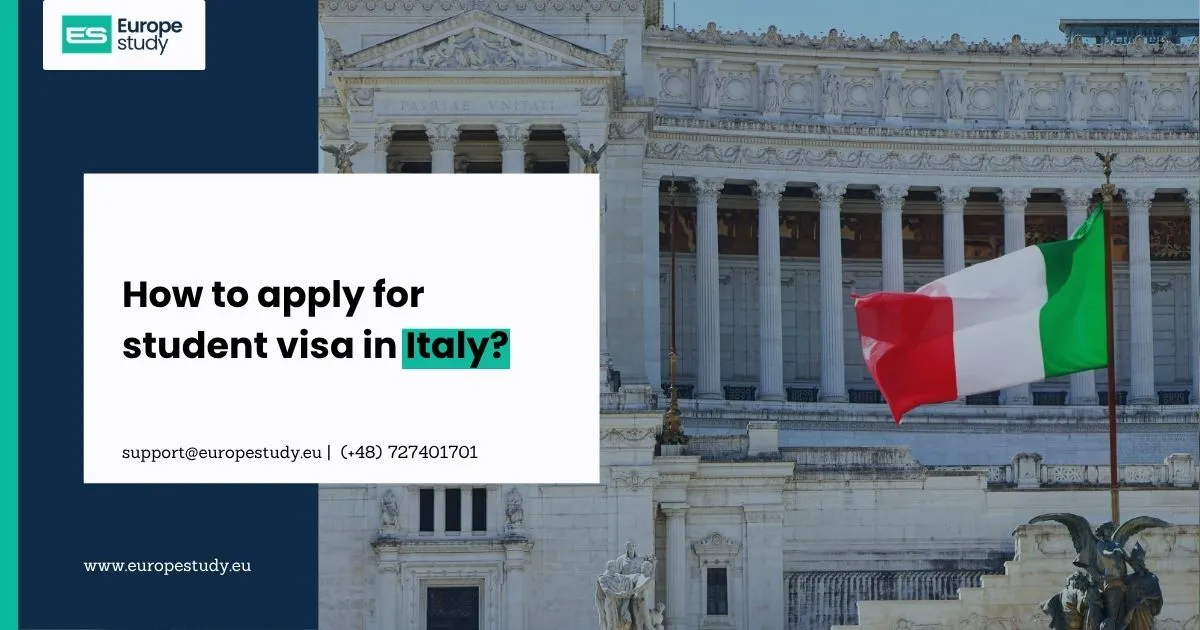
Italy is the undisputed leader in Europe for architecture, industrial design, fashion design, and fine arts. Politecnico di Milano is consistently ranked among the top design and architecture schools in the world, and Italy's deep cultural heritage makes it an unparalleled environment for students in creative fields. Italy is also strong in medicine, particularly for English-taught medical programmes that serve large numbers of international students.
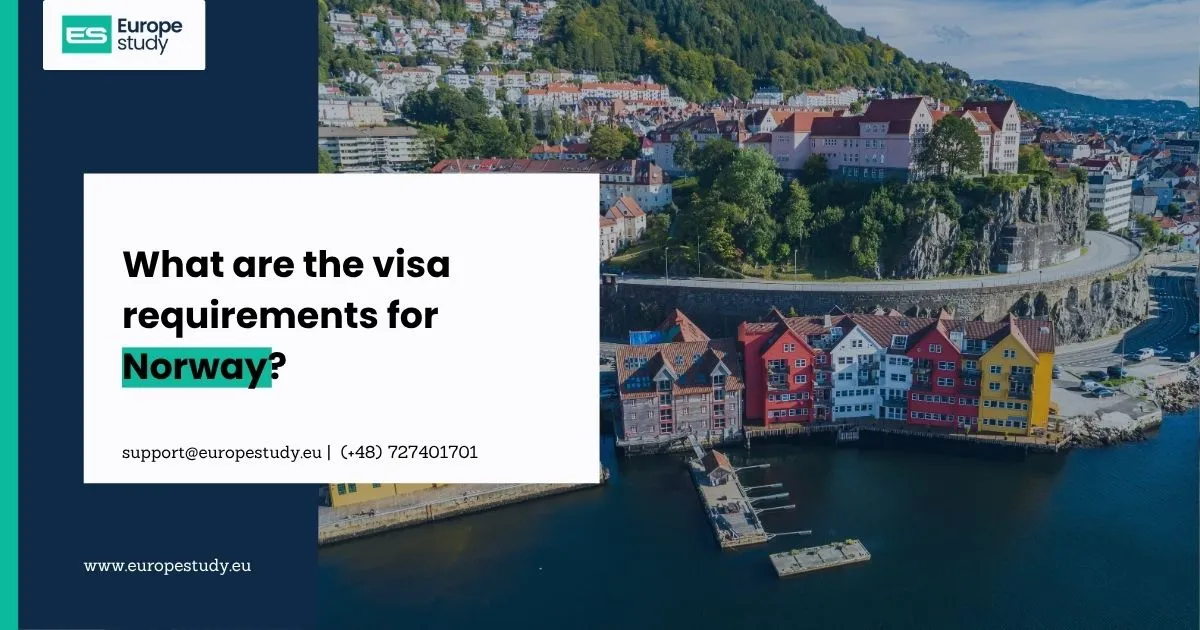
Norway is the best choice for marine sciences, petroleum engineering, fisheries management, Arctic studies, and environmental science. Norway's unique position as a major oil and gas producer and one of the world's leading maritime nations means its universities in these fields have direct, continuous connections to industry that are difficult to replicate elsewhere.
Poland and the Czech Republic offer the most accessible entry points for students interested in medicine, with well-established English-taught medical programmes that serve international students from South Asia, the Middle East, and beyond. Both countries also have growing IT and business sectors with increasingly international job markets.
Portugal is emerging as a strong destination for technology entrepreneurship, tourism management, and social sciences. Lisbon in particular has become one of Europe's fastest-growing startup hubs, and Portuguese universities are developing strong technology and business programmes to match this growth.
Denmark is outstanding for design, architecture, pharmaceutical sciences, and food technology. The Danish Design School and the Royal Danish Academy are internationally renowned, and Denmark's pharmaceutical giant Novo Nordisk creates a powerful connection between Danish universities and the global health sciences industry.
Factor 2 — Tuition Fees and Financial Considerations
Your budget is the second most critical factor, and Europe's tuition fee landscape is genuinely diverse — ranging from completely free at Norwegian and most German public universities to €25,000 per year at some Irish institutions. Understanding the true cost of studying in each country — including both tuition and living costs — is essential for making a financially realistic choice.
Germany offers the most financially attractive option for most international students. Public universities charge zero to minimal tuition fees for all students regardless of nationality. The semester fee of approximately €300 to €400 is the only mandatory payment. Combined with student wages of €12 to €16 per hour and living costs of approximately €900 to €1,200 per month, Germany is genuinely one of the most affordable developed-world study destinations on the planet. A student who works part-time can cover a significant portion of their living expenses while completing their degree at a world-class institution.
Norway has a similar no-tuition model at public universities. Living costs are higher than Germany — approximately €1,100 to €1,500 per month — but Norway's student wages are among the highest in Europe at €15 to €20 per hour, and there is no legal limit on how many hours students can work per week, meaning disciplined students can effectively cover their living costs through part-time employment.
France's public universities are remarkably affordable, with tuition fees for non-EU students of approximately €2,770 to €3,770 per year for most programmes at Bachelor's and Master's level. This is significantly lower than the UK, Ireland, the Netherlands, or Scandinavia. Living costs are moderate — approximately €900 to €1,300 per month outside Paris, higher in Paris itself.
Italy and Spain offer a strong combination of affordable public university tuition (€900 to €7,000 per year depending on institution and programme) and relatively low living costs (€700 to €1,100 per month outside the most expensive cities). For students who want a Mediterranean lifestyle, rich cultural experience, and affordable education, Italy and Spain offer excellent value.
Poland, Portugal, the Czech Republic, and Hungary have among the lowest living costs in Europe — typically €500 to €900 per month — alongside affordable tuition fees at both public and private universities. These countries offer excellent financial value for students on tighter budgets and are particularly attractive for students planning multi-year degree programmes.
The Netherlands, Sweden, Denmark, and Ireland have higher tuition fees for non-EU students — typically ranging from €8,000 to €25,000 per year — along with higher living costs. However, they also have stronger job markets, higher student wages, and more direct pathways to well-paid graduate employment that can justify the higher upfront investment.
When calculating the true cost of studying in a European country, always include tuition fees, living costs (accommodation, food, transport, healthcare, personal expenses), visa and immigration fees, travel costs, and the cost of language preparation or test fees. And always factor in your earning potential from part-time work, which can range from €400 to €1,200 per month depending on the country and your working hours.
Factor 3 — Language of Instruction
Language is one of the most practical barriers to studying in Europe, and your language ability — or your willingness to learn a new language — should play a central role in your choice of destination.
If you are most comfortable in English and do not want to learn a new language, Ireland is the simplest choice — everything operates in English, from your degree to your daily life. The Netherlands and the Nordic countries (Sweden, Norway, Denmark) are the next most accessible, with large numbers of English-taught programmes and very high English proficiency in the general population. Daily life in these countries is manageable in English, though learning the local language enhances your experience and job prospects.
If you are willing to learn a new language — or if you already speak one — a much broader range of options opens up. Learning German gives you access to all of Germany's public university system at undergraduate level (not just the English-taught postgraduate programmes), and German language proficiency is a major asset in the German job market. French opens doors to France's full range of prestigious institutions, including the grandes écoles. Spanish connects you to Spain's full university system and, importantly, to a global language spoken by 500 million people across Europe and Latin America.
Learning a European language during your studies is an investment that pays dividends far beyond your degree. It transforms your daily experience, accelerates your social integration, expands your employment options, and in most countries is a requirement for permanent residency and citizenship. Students who commit to language learning from day one consistently have better overall experiences and better career outcomes than those who remain entirely in English-language bubbles.
For students who are not yet ready to commit to full immersion in a local language, the most practical path is to choose an English-taught programme in a country where the local language is accessible enough to learn alongside your studies. Germany and the Netherlands are excellent for this — your degree is in English, but you have the opportunity and strong incentive to learn German or Dutch, and the resources to do so are readily available.
Factor 4 — Cost of Living and Quality of Life
Cost of living varies dramatically across Europe, and this is a factor that affects your daily wellbeing and financial sustainability throughout your studies — not just an abstract financial metric.
The Nordic countries — Norway, Sweden, Denmark, Finland — offer exceptional quality of life: safety, social services, environmental quality, work-life balance, and physical infrastructure are all among the best in the world. But they come at a price. Monthly living costs in Oslo, Stockholm, and Copenhagen are among the highest in Europe. Students who choose Nordic countries need realistic financial planning and should plan to work part-time to maintain a comfortable standard of living.
Germany sits in the middle of the European cost spectrum. Munich and Frankfurt are expensive by German standards, but Berlin, Hamburg, Cologne, and university towns like Freiburg, Heidelberg, and Münster offer very reasonable living costs for a developed western European country. Student housing through the Studentenwerk (student welfare organisation) is significantly cheaper than private market rents.
The Netherlands is moderately expensive — Amsterdam is the most costly Dutch city, while Eindhoven, Maastricht, and Tilburg are considerably more affordable. Spanish and Italian cities outside Madrid, Barcelona, Rome, and Milan are very affordable by western European standards. Poland and the Czech Republic are among the most affordable countries in the EU, and students in Warsaw, Kraków, Prague, and Brno enjoy a high quality of life at a fraction of what it costs in western Europe.
Quality of life is not just about cost. It includes safety, social inclusion, healthcare, environmental quality, cultural richness, and the general friendliness of the local population toward international students. Based on these factors, the Nordic countries rank highest globally, followed by Germany and the Netherlands. Southern European countries like Spain, Italy, and Portugal rank highly for lifestyle, culture, and warmth of reception, even if their economies and public services are less advanced than in the north.
Factor 5 — Post-Study Work and Permanent Residency Pathways
If your goal is not just to get a degree but to build a long-term career and life in Europe, the post-study immigration pathway is one of the most important factors in your country choice. Different European countries offer very different post-study work visas and permanent residency timelines, and these differences can affect your life prospects significantly.
Germany offers the best overall combination of post-study opportunity and PR timeline for most international graduates. The 18-month job-seeker visa gives you significant time to find employment, the EU Blue Card allows PR after just 21 to 33 months for qualifying professionals, and Germany's labour market demand for engineers, IT professionals, and healthcare workers ensures that graduates with relevant qualifications can find employment relatively quickly.
Norway has the shortest PR timeline in Europe — just three years of continuous legal residence, including study years. For a student who completes a two-year Master's and then works for one year, permanent residency may be achievable in as little as three years. Combined with zero tuition fees, this makes Norway an extraordinary long-term settlement option.
Ireland offers up to 24 months of post-study work authorisation for postgraduate degree holders and is the English-speaking gateway to EU permanent residency. Its strong tech and pharma job market makes graduate employment realistic for degree holders in relevant fields.
Portugal offers citizenship after just five years of legal residence — the same threshold as permanent residency — making it one of the fastest routes to a European passport. Its welcoming immigration environment and growing economy make it increasingly attractive for students planning long-term settlement.
Sweden and Denmark offer reasonable post-study work periods and clear PR pathways, though Denmark's eight-year standard citizenship timeline (with a four-year fast-track for highly integrated individuals) is among the longest in Europe.
Factor 6 — Safety, Social Environment, and Student Wellbeing
International students spend years of their lives in their chosen destination. The safety, social environment, and overall wellbeing of international students in a country matters enormously to the quality of the experience.
The Nordic countries rank highest in the world for safety, gender equality, social inclusion, and student wellbeing. International students in Norway, Sweden, Denmark, and Finland consistently report feeling safe, respected, and welcome. The countries' strong public institutions and transparent governance create environments where students can focus on their studies without fear.
Germany and the Netherlands are also very safe and welcoming, with large, established international student communities, well-resourced international student support offices, and cities that are used to diversity. The Netherlands in particular has a highly cosmopolitan culture, particularly in Amsterdam and Eindhoven.
Ireland is warm, English-speaking, and culturally close to international students from South Asia and Africa who have prior exposure to British or Irish cultural influences. The Irish people are famously hospitable, and the international student community in Dublin, Cork, and Galway is large and well-supported.
Spain, Italy, and Portugal are known for warm, welcoming cultures and exceptional quality of life. These countries may have fewer formal international student support structures than northern Europe, but the social environment is genuinely open and inclusive, and international students rarely feel isolated.
Poland and the Czech Republic have become significantly more international in recent years, and both have growing communities of students from South Asia, the Middle East, and Africa. Social integration can be more challenging in these countries for students from very different cultural backgrounds, but most universities have strong international student offices and English-speaking support networks.
Factor 7 — Scholarships and Financial Aid
Scholarships can dramatically change the financial equation of studying in any European country. Before making your final country choice, always research the scholarship landscape for your target destination.
Germany's DAAD (German Academic Exchange Service) is one of the world's most generous scholarship bodies, offering a wide range of fellowships for international students studying in Germany at every level. The DAAD covers living expenses, health insurance, and sometimes travel, and its scholarships are awarded based on academic merit and research potential.
The Swedish Institute (SI) offers the prestigious Swedish Institute Scholarships for Global Professionals (SISGP), which covers tuition, living expenses, travel, and insurance for students from developing countries. Competition is intense but the award is transformative.
France's Eiffel Excellence Scholarship Programme supports high-achieving international students at French Master's and PhD level. The Netherlands Fellowship Programmes and the Holland Scholarship support international students at Dutch institutions.
Norwegian universities and the Norwegian government offer PhD positions that function as fully paid jobs — typically NOK 450,000 to NOK 530,000 per year — making doctoral study in Norway financially outstanding.
The Erasmus+ programme provides mobility grants for students studying at partner institutions within Europe and supports study exchanges between European universities and institutions in partner countries around the world.
Many individual universities across Europe offer institutional scholarships, tuition waivers, and merit awards for outstanding international applicants. These are often less competitive than national government scholarships and represent an underexplored funding source for students who research them proactively.
Factor 8 — Visa Ease and Processing Time
The complexity and cost of the student visa process varies across European countries, and this is a practical consideration — particularly for students applying from countries with historically more scrutinised visa applications.
France, Portugal, and Poland have among the most straightforward and fastest student visa processes in Europe — typically two to five weeks and minimal bureaucratic complexity. Norway, Sweden, and Denmark require a residence permit rather than a traditional visa, with processing times of four to eight weeks and a document-based process with no interview.
Germany requires a personal interview at the German embassy, has longer processing times of six to twelve weeks plus appointment waiting time, and requires the APS academic evaluation certificate for students from China, India, and Vietnam. This is manageable but requires more planning and earlier preparation.
Ireland has a higher visa refusal rate than some other European countries, particularly for applicants from certain nationalities, and requires careful attention to financial documentation.
For students applying from South Asia, West Africa, or other regions with historically high visa scrutiny, choosing a country with a more streamlined visa process — France, Portugal, Poland — reduces risk and simplifies the overall journey. Europe Study's team advises students on the visa landscape for their specific nationality and target destination as part of the personalised guidance process.
How to Make Your Final Decision — A Practical Framework
With all these factors in mind, here is a simple framework for making your final country choice. Start by ranking your five most important priorities from the list of factors in this guide. Most students find that two or three factors dominate their decision — budget, field of study, and post-study settlement plans are the most common priorities.
If your top priority is cost, Germany and Norway are the clear winners. If your top priority is English-language environment, Ireland and the Netherlands lead. If your top priority is long-term settlement and PR, Norway and Germany are the best options. If your top priority is career in technology and business, Ireland and the Netherlands are strongest. If your top priority is quality of life at an affordable cost, Spain, Italy, and Portugal offer the most compelling combination.
Once you have identified the countries that match your priorities, research specific universities and programmes within those countries. Shortlist three to five programmes across two or three countries, check your eligibility against their specific requirements, and begin preparing your application. Applying to multiple countries simultaneously is entirely feasible and recommended — it protects your options and maximises your probability of beginning your studies on schedule.
Why Europe Study Is the Partner You Need for This Decision
Choosing the right country to study in Europe is a decision with consequences that extend far beyond your degree. It affects your financial situation, your career trajectory, your social life, your language development, and potentially your long-term home. Making this decision with accurate, personalised, and up-to-date information is far better than making it based on general online research alone.
Europe Study (https://europestudy.eu) specialises in exactly this kind of personalised guidance. The team at Europe Study has deep, current knowledge of universities, programmes, admissions requirements, visa processes, scholarship opportunities, and immigration pathways across every major European study destination. When you consult with Europe Study, you get a structured, honest assessment of which countries and programmes are the best fit for your specific academic background, budget, language ability, career goals, and life priorities.
Europe Study has helped students from India, Pakistan, Nigeria, Bangladesh, Nepal, and dozens of other countries make confident, well-informed decisions about where to study in Europe — and then supported them through every step of the application, visa, and arrival process. The result is students who arrive in Europe fully prepared, in the right programme, at the right institution, in the right country for their goals.
Visit https://europestudy.eu today to begin your personalised consultation. The right European country for your studies is out there — Europe Study will help you find it.
Frequently Asked Questions
1. How do I choose the best country in Europe to study?
Start by identifying your top priorities — your academic field, your budget, your language ability, your career goals, and your long-term settlement plans. Match these priorities against each country's strengths. Germany is best for engineering and low costs; Ireland for English-speaking tech careers; Norway for free education and fast PR; the Netherlands for English-taught programmes and international business; Poland and Portugal for affordable, accessible admissions. Europe Study (europestudy.eu) provides personalised country-matching consultations based on your specific profile.
2. Which European country is best for international students overall?
Germany consistently ranks as the top overall destination for international students due to its combination of zero tuition at public universities, world-class universities particularly in engineering and technology, a strong job market, high student wages, and a clear path to permanent residency via the EU Blue Card. However, the best country for you personally depends on your field of study, budget, language preferences, and post-study goals.
3. Which European country has the lowest tuition fees for international students?
Germany and Norway both charge zero tuition fees to international students at public universities, making them the most affordable options. France's public universities are also very affordable at €170 to €3,770 per year. Italy and Spain charge between €900 and €7,000 per year at most public institutions. Poland and Portugal are also affordable at €1,000 to €6,000 per year.
4. Which European country is easiest to get a student visa for?
France, Portugal, and Poland have the most straightforward student visa processes in Europe, with processing times of two to five weeks and minimal interview requirements. Norway, Sweden, and Denmark use a residence permit system that is document-based and does not require an interview. Germany has the most complex process, requiring a personal interview and in some cases an APS academic evaluation certificate.
5. Which European country is best for studying in English?
Ireland is the simplest choice as the only English-speaking EU member state. The Netherlands is the most English-friendly non-English-speaking country, with hundreds of fully English-taught programmes and very high English proficiency across the population. Sweden, Denmark, and Norway also offer extensive English-taught programmes and have excellent English proficiency among the local population.
6. Which European country gives permanent residency fastest after study?
Norway is the fastest, requiring only three years of continuous legal residence for PR eligibility — including study years. Germany's EU Blue Card route allows PR in as little as 21 to 33 months for qualified professionals with a high-salary job. Portugal offers citizenship after just five years of residence, the same threshold as permanent residency. Most other EU countries require five years for PR and eight to ten years for citizenship.
7. Which European country is best for studying computer science?
Germany, the Netherlands, Sweden, and Ireland are the strongest options for computer science studies in Europe. Germany's TU Munich, RWTH Aachen, and KIT are world-leaders in computer science and engineering. The Netherlands' Delft and Eindhoven universities have excellent technology programmes. Ireland's universities have direct access to the European headquarters of Google, Apple, Facebook, and Amazon. Sweden's KTH and Chalmers are excellent for computer science with a sustainability focus.
8. Which European country is cheapest to live in as a student?
Poland is the most affordable country in the EU for students, with monthly living costs of approximately €500 to €800. The Czech Republic and Hungary are similarly affordable at €550 to €900 per month. Portugal and Spain are affordable at €700 to €1,100 per month. Germany and France are moderate at €900 to €1,300 per month. Norway and Denmark are the most expensive at €1,100 to €1,600 per month, though high student wages partially offset the higher cost.
9. Should I choose Germany or the Netherlands for studying in Europe?
Both are excellent. Germany is better if cost is your priority — free tuition, lower living costs, and a more powerful industrial job market for engineering graduates. The Netherlands is better if you want the broadest range of English-taught programmes at undergraduate level, an internationally oriented academic culture, and direct access to multinational corporate environments. For technology and engineering: Germany. For international business, design, and logistics: Netherlands. For English-language accessibility: Netherlands.
10. Which European country is best for studying medicine?
For English-taught medicine, the Czech Republic and Hungary are the most popular and accessible options — particularly universities like Charles University (Prague), Masaryk University (Brno), Semmelweis University (Budapest), and the University of Debrecen. These medical degrees are internationally recognised and have served international students for decades. Germany, France, and Italy have outstanding medical programmes but primarily in local languages and with more competitive admissions.
11. Is it better to study in northern or southern Europe?
This depends on your priorities. Northern Europe — Germany, Netherlands, Scandinavia — offers higher academic rankings, stronger job markets, higher wages, and better post-study immigration pathways, but at higher costs and in colder climates. Southern Europe — Spain, Italy, Portugal — offers affordable education, exceptional quality of life, warm weather, and rich cultural experiences, but with generally less robust post-study job markets and lower average wages. The best choice depends on whether you prioritise career outcomes or lifestyle, and whether you plan to stay in Europe long-term.
12. Which European country should I choose if I want to learn a new language?
Germany is the best choice if you want to learn a language that has maximum career value in Europe — German is spoken by over 100 million people and is essential for full access to Germany's job market. French is the second most valuable European language for international career purposes. Spanish opens access to the world's second-largest language community. If language learning is a goal but not a priority over everything else, Germany combines free education with one of the world's most economically valuable languages.
13. Which is better for Indian students — Germany or Ireland?
Both are popular with Indian students. Germany offers zero tuition at public universities, strong engineering and IT programmes, high student wages, and a 21-month EU Blue Card PR pathway — making it the better long-term value and settlement option. Ireland offers an English-speaking environment, a familiar legal system, direct access to global tech company offices, and up to 24 months of post-study work authorisation for postgraduate graduates. For engineering: Germany. For IT, business, and English-language comfort: Ireland.
14. How many countries should I apply to when choosing to study in Europe?
Most education consultants, including the team at Europe Study, recommend applying to universities in two to three European countries simultaneously. This protects you against visa delays or rejection at any single destination, gives you genuine options when offers arrive, and allows you to make a final choice based on the actual offers and conditions you receive rather than hypothetically. Applying to multiple countries is straightforward since most European university applications are made directly to the institution.
15. How can Europe Study help me choose the best country in Europe to study?
Europe Study (https://europestudy.eu) provides personalised, expert consultations that help every student identify the best European country and programme for their specific academic profile, budget, language background, career goals, and life priorities. The team has deep, current knowledge of admissions requirements, scholarship opportunities, visa processes, cost of living, job markets, and PR pathways across all major European study destinations. Rather than spending weeks researching conflicting information online, a consultation with Europe Study gives you a clear, honest, and personalised recommendation — along with a complete roadmap for making it happen. Visit europestudy.eu today and take the first step toward choosing and reaching your ideal European study destination.
Conclusion
Choosing the best country in Europe for your studies is a decision that deserves careful thought, accurate information, and personalised reflection on your own goals and priorities. There is no universal right answer — the best country for one student may not be the best for another. But with the right framework and the right information, the decision becomes clear.
Germany leads for engineering, free education, and long-term career value. Norway offers free tuition and Europe's fastest PR pathway. Ireland is the English-speaking tech and pharma hub. The Netherlands combines English accessibility with international business excellence. France brings world-class prestige at affordable public university costs. Spain, Italy, and Portugal offer culture, affordability, and growing academic quality. Poland and the Czech Republic provide accessible, affordable pathways — particularly for medicine and applied sciences.
Your ideal European destination matches your academic field, fits your budget, suits your language comfort level, aligns with your career plans, and supports your long-term life goals. Finding that match is what Europe Study does every day.
Visit https://europestudy.eu today and speak with an expert consultant who will help you choose the right country, the right university, and the right programme — with confidence and clarity.
By the Europe Study Team | europestudy.eu Europe Study — Your Trusted Partner for Education in Europe