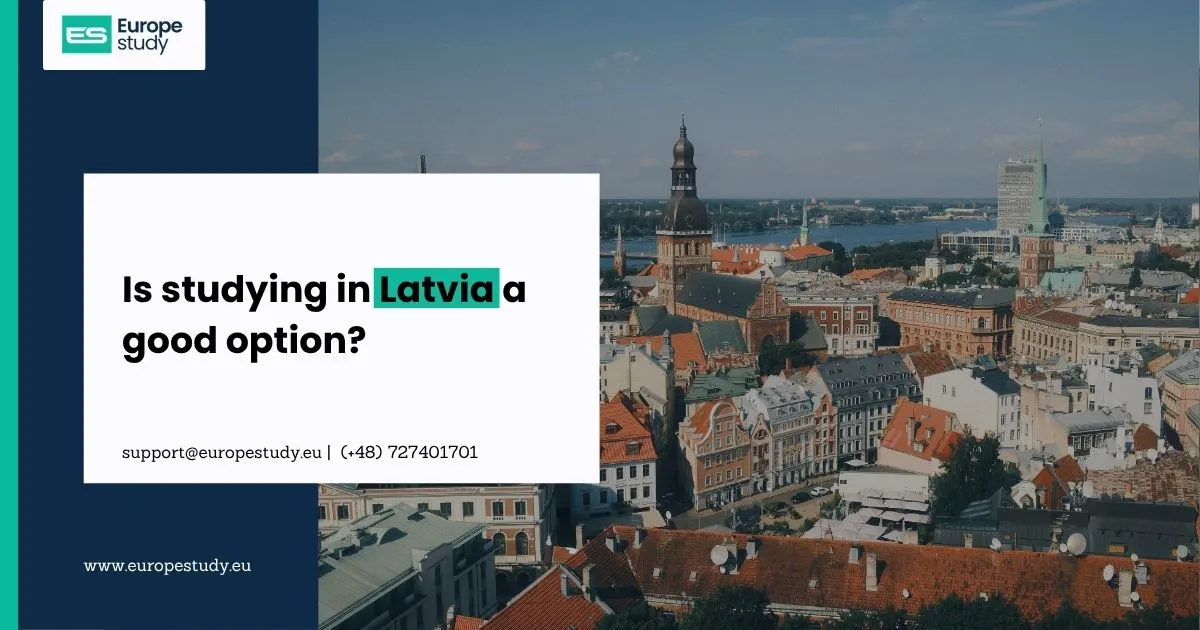
Is studying in Latvia a good option?
Is Studying in Latvia a Good Option? A Complete Europe Study Guide for International Students
When students think of studying in Europe, the first names that come to mind are usually Germany, France, the UK, Netherlands, or Italy. Latvia, a small but beautiful Baltic country, is often overlooked. Yet Latvia has been quietly establishing itself as an attractive study destination for international students, offering English-taught programs, affordable tuition, modern universities, EU recognition, and a high quality of life. A common question students bring to Europe Study is honest and important: is studying in Latvia really a good option, or should I look elsewhere?
The honest answer is that Latvia is genuinely a good option — for the right kind of student, with the right goals. The country offers a unique combination of affordable European education, English-taught programs, especially in medicine, business, IT, and engineering, and a safe, welcoming environment in the heart of the Baltic region. At the same time, Latvia is not the right fit for everyone. Job market opportunities can be more competitive than in Germany or Ireland, the local population is smaller, and global brand recognition is lower than top European destinations. In this detailed guide, Europe Study explains the pros, cons, top universities, tuition fees, scholarships, lifestyle, and long-term career prospects of studying in Latvia, so you can decide whether it truly fits your goals.
Why Latvia Is Emerging as a Study Destination
Latvia, located on the eastern shore of the Baltic Sea, is a full member of the European Union, the Schengen Area, the Eurozone, and NATO. This means EU-recognised degrees, freedom of movement within Schengen, EU work and residence opportunities, and strong political and economic stability.
In the past two decades, Latvia has invested heavily in higher education, English-taught programs, modern campuses, and international student support. Latvian universities now attract students from Asia, Africa, the Middle East, Latin America, and other parts of Europe, particularly for medicine, dentistry, business, IT, and engineering. Combined with a low cost of living compared to Western Europe, Latvia offers a strong cost-to-quality ratio.
Beyond education, Latvia is known for its rich culture, medieval architecture, forests, lakes, and Baltic coastline. Riga, the capital, blends historic charm with modern lifestyle, while smaller cities like Daugavpils, Liepāja, and Jelgava offer quieter, more affordable student environments.
Latvian Higher Education System at a Glance
Latvia's higher education system is structured according to European Bologna Process standards. It includes two main types of institutions, both of which welcome international students.
Universities
Latvian universities focus on both academic and research-based education at bachelor's, master's, and PhD levels. Examples include the University of Latvia, Riga Technical University, Riga Stradiņš University, Latvia University of Life Sciences and Technologies, Daugavpils University, Liepāja University, and Latvian Academy of Music.
Universities of Applied Sciences and Colleges (Augstskolas / Augstskolas)
Some institutions focus more on applied, profession-oriented education in fields like business, IT, hospitality, design, engineering, and social work. Examples include the BA School of Business and Finance, RISEBA University of Applied Sciences, Turiba University, and several others.
Both universities and universities of applied sciences in Latvia are officially recognised and offer English-taught programs to international students.
Levels of Study Available in Latvia
Latvia offers three main levels of higher education, all open to international students.
Bachelor's Programs
Bachelor's programs in Latvia typically last three to four years (180–240 ECTS) and are offered in fields like business, IT, engineering, social sciences, design, hospitality, and life sciences. Many bachelor's programs are taught in English, particularly in business, IT, and international fields.
Master's Programs
Master's programs in Latvia usually last one to two years and are widely available in English in fields like business, finance, MBA, IT, data, engineering, public health, international relations, design, and life sciences.
Doctoral (PhD) Programs
PhD programs in Latvia usually last three to four years and are research-focused. Many doctoral candidates receive funding through research positions, projects, or stipends, especially in technical and scientific fields.
Medical and Dental Programs
Latvia is particularly well-known for its English-taught long-cycle programs in medicine, dentistry, and pharmacy, especially at Riga Stradiņš University and the University of Latvia. These programs are very popular among international students from Europe, the Middle East, Asia, and Africa.
Top Universities in Latvia
Although Latvia is a small country, several of its universities have strong reputations both regionally and internationally.
University of Latvia (Latvijas Universitāte)
The University of Latvia, founded in 1919, is the largest and one of the oldest universities in the country. It offers a wide range of programs in humanities, social sciences, business, economics, IT, natural sciences, medicine, law, and education. Many programs at master's and PhD level are taught in English.
The university appears in international rankings and has a strong reputation for research, particularly in fields like physics, computer science, and life sciences.
Riga Technical University (RTU)
Riga Technical University is Latvia's leading engineering and technology university. It offers strong programs in mechanical engineering, electrical engineering, computer science, civil engineering, architecture, transport engineering, business, and economics.
RTU offers many English-taught bachelor's, master's, and PhD programs and has growing international student communities. It is also active in EU-funded research projects and partnerships with industry.
Riga Stradiņš University (RSU)
Riga Stradiņš University is one of the most internationally recognised universities in Latvia, especially for medicine, dentistry, pharmacy, public health, law, communications, and social sciences. It is particularly popular among international students because of its English-taught medical and dental programs.
RSU has a long tradition of training international medical professionals, and its degrees are recognised across the EU and many countries worldwide.
Latvia University of Life Sciences and Technologies (LBTU)
Located in Jelgava, the Latvia University of Life Sciences and Technologies is well-regarded for agriculture, forestry, food sciences, veterinary medicine, environmental engineering, and rural development. It offers a number of English-taught programs at master's and PhD levels.
BA School of Business and Finance, RISEBA, Turiba, Stockholm School of Economics in Riga (SSE Riga)
Latvia is also home to several business schools and universities of applied sciences. The BA School of Business and Finance, RISEBA University of Applied Sciences, Turiba University, and the Stockholm School of Economics in Riga (SSE Riga) offer strong English-taught programs in business, finance, management, communication, and design.
SSE Riga in particular has a strong regional reputation, often regarded as one of the leading business schools in the Baltic region.
Other Universities
Other institutions, such as Daugavpils University, Liepāja University, the Latvian Academy of Music Jāzeps Vītols, Latvian Academy of Art, and Latvian Maritime Academy, offer specialised education in their respective fields and may also welcome international students.
Specific rankings, programs, and admission rules may vary by university, intake, and year. Always check the latest official information before applying.
Most Popular Fields of Study in Latvia
International students typically choose Latvia for its competitive English-taught programs in several key areas. Some of the most popular fields include:
Medicine, dentistry, and pharmacy (especially at Riga Stradiņš University and University of Latvia), business administration, MBA, finance, marketing, management, economics, computer science, software engineering, data science, AI, cybersecurity, mechanical engineering, electrical engineering, civil engineering, architecture, transport engineering, public health, life sciences, biotechnology, social sciences, psychology, communication, international relations, law (LLM and selected programs in English), design, fashion, hospitality, and tourism management.
Each university tends to have its own strongest fields, so aligning your area of interest with the right institution is important.
Tuition Fees and Cost of Studying in Latvia
Tuition fees in Latvia vary based on the university, program, level of study, and your nationality, but are generally lower than in many Western European countries.
Bachelor's Programs
English-taught bachelor's programs at Latvian universities typically have moderate tuition fees, often comparable to other Baltic and Central European countries. Universities of applied sciences may charge slightly lower fees than research universities for similar fields. Subjects like business, IT, social sciences, and engineering are widely available in English at competitive prices.
Master's Programs
Master's tuition in Latvia is generally affordable compared to Western Europe. Specialised programs in business, MBA, IT, engineering, public health, and social sciences are taught in English with reasonable fees. Top business schools like SSE Riga may have higher tuition, but still often more competitive than equivalents in Western Europe.
PhD Programs
PhD programs in Latvia are usually affordable, and some include funded research positions, especially in science, technology, engineering, and medical fields.
Medical and Dental Programs
Medical and dental programs, particularly those taught in English at Riga Stradiņš University and the University of Latvia, are more expensive than general programs but generally more affordable than equivalent programs in Western Europe, the UK, and many private institutions worldwide.
Tuition fees can vary based on the university, program, intake, and your nationality. Europe Study strongly recommends confirming the latest official tuition fees directly with each institution before applying.
Cost of Living in Latvia for International Students
Beyond tuition, cost of living is the next biggest factor in your total study budget. Fortunately, Latvia remains one of the more affordable countries in the EU for international students.
Accommodation
Accommodation is usually the largest monthly expense for students. Options include university dormitories, private student housing, shared apartments, and individual rentals. Riga is the most expensive city in Latvia, while cities like Daugavpils, Liepāja, Jelgava, and Valmiera are noticeably more affordable.
Dormitories, where available, are usually the cheapest option, while private studios and one-bedroom apartments in city centres are the most expensive. Living slightly outside city centres or sharing apartments with other students can significantly reduce rent.
Food and Groceries
Latvian supermarkets like Rimi, Maxima, Lidl, and Mego offer affordable groceries, especially for students who cook at home. Eating out at student-friendly cafés and traditional Latvian restaurants is also relatively reasonable. University canteens often offer subsidised student meals at competitive prices.
Transport
Public transport in Latvian cities is modern and student-friendly. Riga has buses, trams, and trolleybuses, with discounted monthly passes for students. Walking and cycling are common in compact city centres.
Utilities, Internet, and Mobile
Utilities such as electricity, heating, water, and internet may be included in student housing rents or paid separately in private rentals. Mobile and internet packages in Latvia are competitively priced, with several student-friendly options available.
Health Insurance and Healthcare
International students from non-EU/EEA countries are generally required to have valid health insurance covering their stay in Latvia, especially for the student visa and residence permit. EU/EEA students can usually use the European Health Insurance Card (EHIC) or equivalent national insurance.
Books, Study Materials, and Personal Expenses
Most universities have well-equipped libraries, e-resources, and student platforms, reducing the need to buy expensive textbooks. Personal expenses for warm winter clothing, social activities, travel within Europe, and entertainment depend on your lifestyle.
Overall, Latvia offers one of the most balanced cost-of-living environments in the EU, allowing many international students to live comfortably on relatively modest monthly budgets, especially outside Riga.
Cost Differences Between Latvian Cities
The city you choose significantly affects your overall cost of studying in Latvia.
Riga
Riga is the capital and largest city, home to the University of Latvia, Riga Technical University, Riga Stradiņš University, SSE Riga, RISEBA, Turiba, and other institutions. It offers the best mix of academic, career, and lifestyle opportunities but is also the most expensive city in the country in terms of rent and daily costs.
Jelgava
Jelgava, a short distance from Riga, is home to the Latvia University of Life Sciences and Technologies. It is more affordable than Riga while still offering a vibrant student environment and good transport links to the capital.
Daugavpils, Liepāja, and Smaller Cities
Daugavpils (Latvia's second-largest city), Liepāja, Ventspils, Valmiera, and other smaller cities offer significantly lower living costs and tight-knit student communities. These cities can be attractive for students focused on affordability and quieter lifestyles, especially when studying at Daugavpils University, Liepāja University, or other regional institutions.
Language of Instruction and Daily Life
The official language of Latvia is Latvian, and Russian is also widely spoken, especially in Riga and eastern Latvia. However, English is increasingly used in higher education, business, and daily life in major cities.
Most international programs at Latvian universities are taught entirely in English, including bachelor's, master's, and PhD levels. Many young Latvians speak good English, and you will find that you can manage most daily tasks in Riga and other major cities without speaking Latvian.
Learning some basic Latvian is highly recommended for daily life, internships, part-time work, and long-term career or PR plans in Latvia.
Student Visa and Residence Permit Requirements
For international students, especially those from non-EU/EEA countries, visa and residence permit rules are a critical part of studying in Latvia.
EU/EEA and Swiss Nationals
EU/EEA and Swiss nationals do not need a visa to enter Latvia for studies. However, if they plan to stay longer than 90 days, they usually need to register their stay and obtain a residence certificate.
Non-EU/EEA Nationals
Non-EU/EEA students typically need a long-stay (D) visa or a temporary residence permit for study purposes, depending on the length of the program and the latest immigration rules.
For short courses up to 90 days, a Schengen short-stay (C) visa may be sufficient. For courses longer than 3 months, students usually apply for a temporary residence permit for studies, which is issued by the Latvian Office of Citizenship and Migration Affairs (PMLP).
Common documents for visa and residence permit applications typically include a valid passport, application form, photographs, official acceptance letter from a Latvian university, proof of sufficient financial means, accommodation proof, health insurance covering Latvia, criminal record certificate, translated and apostilled documents (if not in English or Latvian), and visa or residence permit application fee.
Financial requirements are usually based on a minimum monthly amount defined by Latvian authorities, multiplied by the duration of your stay. Rules and amounts can change and may vary based on your nationality and the latest official rules. Europe Study strongly recommends checking the current requirements with the Latvian embassy or consulate in your country and the PMLP website.
Scholarships and Funding Options in Latvia
Although Latvia is already affordable, scholarships can further reduce your overall costs.
Latvian Government Scholarships
The Latvian government, through the State Education Development Agency (VIAA), offers various scholarships for international students, including state scholarships for studies and research, summer school scholarships, and scholarships under bilateral agreements between Latvia and other countries.
University Scholarships
Many Latvian universities offer their own merit-based scholarships, tuition discounts, and country-specific awards for international students at bachelor's, master's, and PhD levels. Top universities like the University of Latvia, Riga Technical University, Riga Stradiņš University, SSE Riga, and others frequently update their scholarship offerings.
Erasmus and EU Scholarships
EU-funded programs like Erasmus Mundus Joint Master's Degrees and Erasmus+ mobility grants often include Latvian universities, providing fully or partially funded opportunities at master's and PhD levels.
External Scholarships
Some governments, foundations, and international organisations support studies in Latvia through bilateral or specific scholarship programs. Home-country scholarships, private foundations, and corporate sponsorships can also support Latvian education.
Scholarship eligibility usually depends on academic performance, motivation, course, level of study, and nationality. Europe Study recommends applying for multiple scholarships in parallel to maximise your chances of funding.
Part-Time Work for International Students in Latvia
Part-time work can significantly support international students in Latvia. International students with a valid student residence permit are generally allowed to work part-time during studies, with specific weekly hour limits, and can usually work more during official holidays and breaks, subject to current rules.
Common part-time jobs include roles in cafés, restaurants, retail, customer service, tourism, IT support, delivery, language teaching, tutoring, on-campus jobs, and internships. Riga, in particular, offers strong opportunities, especially in IT, BPO, shared services, and customer service for global companies.
Knowing Latvian or Russian helps with customer-facing jobs, but a large number of English-speaking roles are available in IT, BPO, and international companies, particularly in the capital.
Post-Study Work and Long-Term Stay Options
Latvia offers structured options for international students who wish to remain after their studies. Graduates may be able to apply for a job search residence permit, transition into a work-based residence permit, or qualify for an EU Blue Card for highly qualified professionals meeting specific salary and qualification thresholds.
Over time, qualified employment, continuous residence, language integration, and compliance with legal requirements may support long-term residence and citizenship pathways in Latvia. Specific rules can change and may vary based on your status, qualifications, employer, and the latest official immigration rules. As an EU member, Latvia also allows graduates to explore career opportunities across the EU, subject to local rules.
For students focused on long-term careers in the Baltic region or wider EU, Latvia can serve as a meaningful starting point.
Lifestyle, Culture, and Student Experience
Beyond academics, Latvia offers a particularly attractive lifestyle and cultural experience for international students.
The country combines rich medieval and modern history, beautiful architecture (especially in Riga's UNESCO-listed Old Town), Baltic Sea coastline, forests, lakes, and four distinct seasons. Latvia is also known for its rich cultural life — including the Song and Dance Festival, classical music, theatre, and a vibrant art scene.
Latvian society is generally calm, safe, and orderly, with a strong sense of personal space, structure, and respect for nature. Many young Latvians speak excellent English, and international students often find it relatively easy to integrate into university life and major cities.
So, Is Studying in Latvia Really a Good Option?
Whether studying in Latvia is a good option depends on your personal goals, expectations, and long-term plans. Europe Study suggests evaluating this question across several dimensions.
When Studying in Latvia Is a Strong Choice
Latvia can be a strong choice if you are looking for affordable tuition and living costs combined with EU exposure, an attractive lifestyle, and a quality academic environment. It is especially worth it for students in fields like medicine, dentistry, business, IT, engineering, design, and social sciences, where Latvian universities have strong English-taught programs and global relevance.
Latvia is also worth considering if you want a safe, well-organised, modern country with central European location, easy travel within the EU, and clear post-study work and PR pathways. For students whose long-term plan involves working in the Baltic region or anywhere in the EU, Latvia can serve as a solid foundation.
When Latvia May Not Be the Best Fit
Latvia may not be the ideal choice if your primary goal is to attend a globally top-ranked university with very high brand value for premium global careers in consulting, investment banking, or technology. For such goals, countries like the UK, France, Germany, Netherlands, and Switzerland may offer stronger options.
Latvia may also be less ideal if you expect a very large job market with thousands of multinational headquarters, like Germany or Netherlands. While Riga has a growing job market, it is smaller in scale. In addition, if you do not enjoy cold winters or smaller cities, you may want to compare Latvia with other European destinations more carefully.
In summary, Latvia is "a good option" mainly when your goals, expectations, and field of study align with what the country can realistically offer.
Practical Tips From Europe Study
If you are seriously considering Latvia as your study destination, Europe Study suggests these practical tips for getting the most out of your experience.
Choose your university and program carefully, focusing on accredited public universities, recognised universities of applied sciences, or well-known private institutions with strong international partnerships. Verify recognition of your degree in your home country and in countries where you plan to work later, especially for regulated fields like medicine and dentistry.
Take English proficiency tests like IELTS, TOEFL, or PTE seriously, and consider learning basic Latvian even if your program is fully in English. Apply early, especially for English-taught medical, dental, and MBA programs and scholarship opportunities. Plan your finances realistically, including living costs, health insurance, and travel expenses.
Once in Latvia, take advantage of internships, Erasmus exchanges, networking events, and student communities to enhance your overall experience and career prospects. Travel within Latvia and the Baltics to fully appreciate the unique culture, history, and landscapes of the region.
Common Mistakes to Avoid
Students sometimes lose value from their Latvian study experience due to avoidable mistakes such as:
Choosing universities without checking accreditation and recognition, focusing only on tuition and ignoring overall quality and career outcomes, underestimating the importance of basic Latvian for daily life and part-time work, applying too late and missing scholarships or program deadlines, picking programs that do not align with their long-term career goals, and not exploring international internships or exchanges that can boost employability.
A more strategic approach is to treat Latvia as a serious academic and life decision, not just a budget-friendly or geographically convenient option.
Final Guidance From Europe Study
So, is studying in Latvia a good option? The honest answer is that it can be — for the right student, with the right goals, in the right program. Latvia offers affordable tuition, low cost of living, EU recognition, a safe and welcoming environment, a growing range of English-taught programs, and access to long-term opportunities in the Baltic region and across the EU. For students focused on medicine, dentistry, business, IT, engineering, and certain social sciences, Latvia can be an excellent value-for-money destination.
Because admission rules, tuition fees, scholarships, language requirements, visa procedures, work rights, and PR pathways can vary by university, course, intake, nationality, and the latest official requirements, it is always wise to follow current information and rely on experienced education partners. Europe Study supports international students at every step — from selecting the right country, university, and program, to admissions, scholarships, visas, and pre-departure planning — so that your decision to study in Latvia (or any other European country) becomes a confident, well-informed step toward a successful global future.
FAQs
Are Latvian universities globally recognised?
Yes, degrees from accredited Latvian universities are generally recognised across the European Union and in many other countries worldwide. Europe Study strongly recommends verifying recognition of your specific program with your home country's authorities, especially for regulated fields like medicine, dentistry, law, and engineering.
Can I study in Latvia in English?
Yes. Latvian universities offer a wide range of English-taught bachelor's, master's, and PhD programs, especially in medicine, dentistry, business, IT, engineering, design, and social sciences. English is widely used in academic and professional settings in major Latvian cities.
Is studying in Latvia cheaper than in other European countries?
In most cases, yes. Tuition fees and living costs in Latvia are generally lower than in the UK, Ireland, Netherlands, France, Germany, and the Nordic countries, especially outside Riga. This makes Latvia an attractive option for students with tighter budgets.
Are there scholarships for international students in Latvia?
Yes. International students can apply for scholarships from the Latvian government (through VIAA), university-specific awards, Erasmus Mundus programs, bilateral government scholarships, and external organisations. Eligibility depends on academic profile, program, and nationality.
Is Latvia a safe country for international students?
Latvia is generally considered a safe and friendly country for international students. Like any country, basic precautions are important, especially at night and in tourist-heavy areas. Smaller cities and university towns tend to be particularly safe and welcoming.
Do I need to learn Latvian to study in Latvia?
For English-taught programs, you can complete your degree without strong Latvian skills. However, learning at least basic Latvian (and sometimes Russian) is highly recommended for daily life, internships, part-time work, and long-term career or PR plans in the country.
Can I work part-time as a student in Latvia?
Yes. International students in Latvia can usually work part-time during their studies, with specific rules depending on visa type and EU/non-EU status. Latvian and Russian language skills improve job opportunities, but many roles in IT, BPO, and international companies are available in English.
Are medical and dental degrees in Latvia recognised in other countries?
Latvian medical and dental degrees, especially from accredited universities like Riga Stradiņš University and the University of Latvia, are generally recognised across the EU. Recognition in other countries (such as the US, UK, Canada, Australia, India, or Middle Eastern countries) typically requires passing local licensing exams (e.g., USMLE, PLAB, AMC, MCI/NMC-equivalent processes). Always check the latest rules of your destination country.
Is the job market in Latvia good for international graduates?
Latvia's job market has improved significantly, particularly in Riga's IT, BPO, finance, and shared services sectors. Stronger opportunities exist for graduates with strong English, technical skills, and additional language abilities. Many international graduates also pursue careers in other EU countries after their studies in Latvia.
Can I get permanent residence in Latvia after studying?
Yes. Latvia offers pathways for international graduates to apply for post-study residence permits, transition to work-based permits, EU Blue Card (for qualifying professionals), and eventually qualify for long-term residence and citizenship, subject to meeting all legal conditions and the latest immigration laws.
Is Latvia a good country for medical, business, or engineering studies?
Yes. Latvia is particularly known for English-taught medical and dental programs at Riga Stradiņš University and the University of Latvia, strong business and finance programs at SSE Riga, BA School of Business and Finance, and Turiba, and engineering programs at Riga Technical University. Recognition for professional degrees should be carefully verified with the regulatory authorities of your home or target country.
How can Europe Study help me decide if Latvia is right for me?
Europe Study helps international students compare Latvia with other European countries based on academic goals, budget, career plans, language preferences, and long-term lifestyle expectations. From shortlisting programs and universities to scholarships, applications, and visas, Europe Study provides end-to-end support so your decision to study in Latvia — or anywhere in Europe — is well-informed and confident.