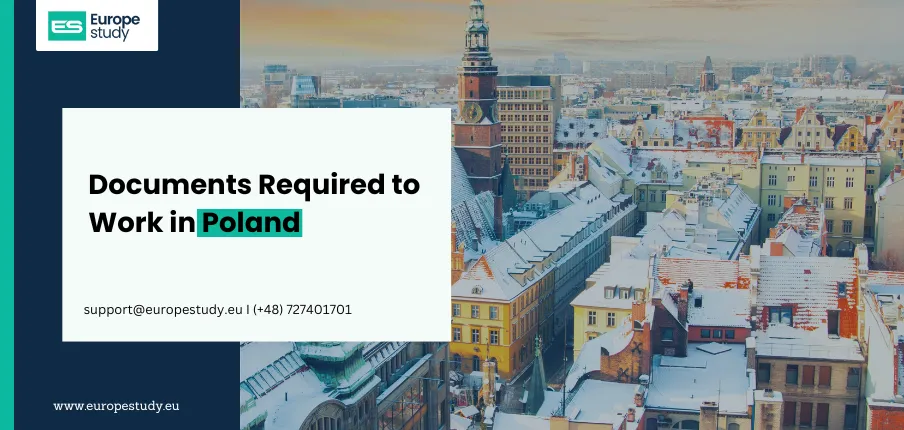
Documents Required to Work in Poland
Poland has become an attractive destination for job seekers from around the world due to its growing economy, competitive salaries, and diverse job opportunities. If you’re planning to work in Poland, it is essential to understand the required documents to ensure a smooth employment process. Here’s a complete guide to help you get started.
1. Work Permit
A work permit is mandatory for non-EU/EEA citizens who want to work in Poland. The employer must apply for the work permit on behalf of the employee. There are different types of work permits, including:
- Type A: For those employed by a Polish company.
- Type B: For board members residing in Poland for over six months.
- Type C, D, E: For employees delegated to Poland from foreign companies.
2. Visa
If you are a non-EU/EEA citizen, you will need a visa to enter Poland. Common types of visas for employment purposes include:
- National D Visa: Allows you to stay in Poland for over 90 days and is often issued for employment.
- Schengen Visa (C Visa): Suitable for short-term business trips but not for long-term work.
3. Residence Permit
If you plan to stay in Poland for an extended period, you will need a residence permit. The most relevant for workers is the Temporary Residence Permit, which is usually granted for up to three years and tied to your employment status.
4. Employment Contract
An employment contract is required for legal employment in Poland. It should include details such as job position, salary, working hours, and contract duration. It can be one of the following types:
- Fixed-term contract
- Indefinite-term contract
- Probationary contract
5. PESEL Number
A PESEL (Personal Identification Number) is necessary for tax and social security purposes. While not mandatory for all foreign workers, obtaining a PESEL simplifies administrative procedures.
6. ZUS Registration
Your employer must register you with the Social Insurance Institution (ZUS) for social security contributions. This ensures access to healthcare, pensions, and other benefits.
7. Tax Identification Number (NIP)
If you do not have a PESEL, you must obtain a Tax Identification Number (NIP) to comply with Polish tax regulations.
8. Health Insurance
Health insurance is mandatory in Poland. Employees are typically covered by the employer’s insurance, but private insurance is also an option for additional coverage.
9. Recognition of Qualifications (if applicable)
Certain professions, such as doctors, engineers, and teachers, require official recognition of foreign qualifications. This may involve certification or validation by Polish authorities.
Conclusion
Poland offers numerous opportunities for foreign workers, but ensuring you have the correct documentation is crucial. By securing the necessary permits, visas, and registrations, you can enjoy a hassle-free work experience in Poland. Always check with your employer or legal advisors for updates on regulations and requirements.
Are you planning to work in Poland? Let us know in the comments below!