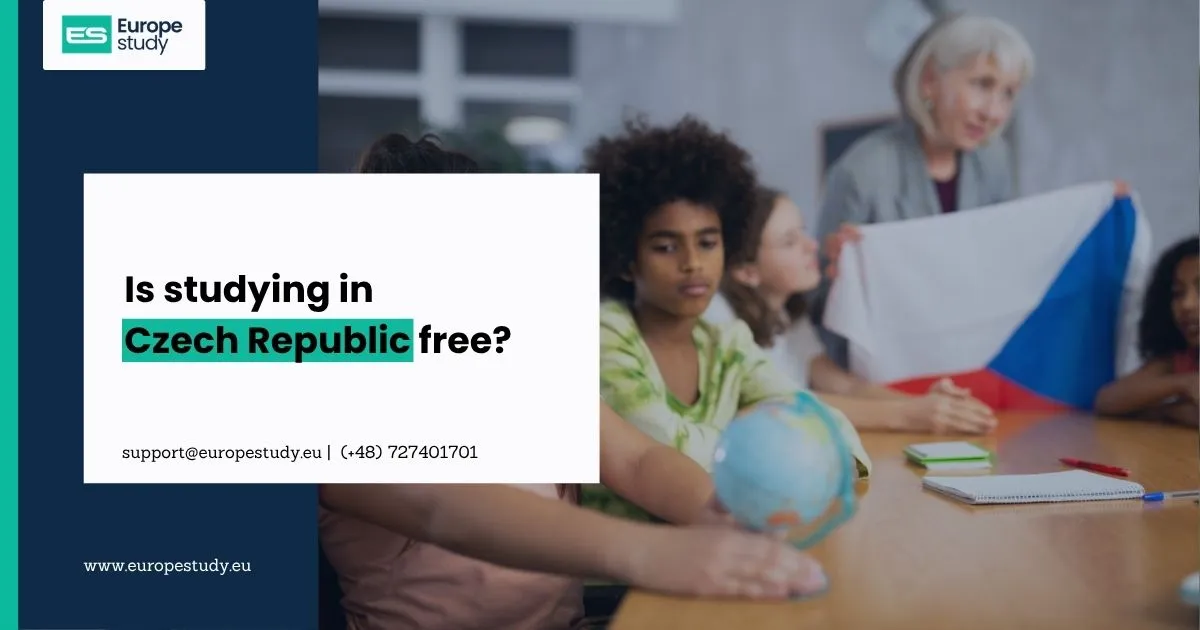
Is studying in Czech Republic free?
Is Studying in Czech Republic Free? A Complete Europe Study Guide for International Students
The Czech Republic, with its historic universities, beautiful cities like Prague, Brno, and Olomouc, strong academic standards, and central European location, has become one of the most attractive study destinations for international students. With globally recognised universities such as Charles University, Czech Technical University in Prague, Masaryk University, Palacký University Olomouc, and University of Economics in Prague (VŠE), the country offers a powerful mix of affordability, quality, and European exposure. One of the most common questions students ask Europe Study is short and direct: is studying in Czech Republic actually free?
The honest answer is: yes and no. Studying in the Czech Republic can genuinely be tuition-free, but only under specific conditions. Public universities offer free education for programs taught in the Czech language, while English-taught programs at the same universities usually charge tuition fees. Private universities also charge tuition regardless of language. In this detailed guide, Europe Study breaks down exactly when studying in Czech Republic is free, when it is paid, what the costs look like, and how international students can make the most of this affordable European destination.
Why International Students Choose Czech Republic
Before looking at costs, it helps to understand why so many international students are turning to the Czech Republic. The country offers high-quality, internationally recognised education, especially in medicine, engineering, business, computer science, social sciences, and humanities. Tuition fees, even for English-taught programs, are usually significantly lower than in the UK, Ireland, Netherlands, or top schools in France and Germany.
The Czech Republic is also known for its safe environment, central European location, vibrant student life, low cost of living compared to Western Europe, and growing job market in IT, finance, automotive, manufacturing, and shared services. With increasing English-taught programs, post-study work options, and clear pathways to long-term residence, it is becoming a smart long-term choice for many students.
The Truth About Free Education in Czech Republic
The "free education" promise in the Czech Republic is real, but it comes with one important condition: language.
Czech-Taught Programs at Public Universities Are Tuition-Free
At public universities, all degree programs taught in the Czech language are tuition-free for both Czech and international students, regardless of nationality. This means if you study a bachelor's, master's, or PhD program in Czech at a public university, you pay no tuition fees, only small administrative or registration charges in some cases.
This applies to top public universities like Charles University, Czech Technical University in Prague, Masaryk University, Palacký University Olomouc, University of Economics Prague (VŠE), Brno University of Technology, and many others.
English-Taught Programs at Public Universities Are Paid
If you choose to study a program in English at a public university, you generally have to pay tuition fees. Fees vary widely based on the university and program but are usually moderate compared to Western Europe, often ranging from a few thousand to higher amounts per year, especially for medical and dental programs.
Private Universities Charge Tuition Regardless of Language
Private universities in the Czech Republic charge tuition fees for all programs, whether they are taught in Czech or English. Private institutions can still offer good value, especially in business, management, and applied fields, but they are not part of the "free education" model.
So when someone asks if studying in Czech Republic is free, the most accurate answer is: yes, if you study in the Czech language at a public university, but no for English-taught and private programs.
Tuition Fees in Czech Republic
To plan realistically, it is important to understand the fee structure across different types of programs.
Czech-Taught Public University Programs
These are tuition-free at all levels — bachelor's, master's, and PhD. Students typically pay only minor administrative or extension fees if they exceed the standard duration of their program.
English-Taught Public University Programs
Tuition fees for English-taught programs at public universities vary by university, course, and level. Programs in business, social sciences, and humanities are usually more affordable, while medical, dental, and pharmaceutical programs tend to be among the highest priced. Despite this, fees are still generally lower than equivalents in Western Europe.
Private University Programs
Private universities charge tuition for all programs. Fees vary by institution, program, and level, but are often competitive compared to other European countries. Private institutions are often chosen for specific programs in management, finance, IT, and design.
Tuition fees may vary based on the university, program, intake, and your nationality, so Europe Study strongly recommends confirming the latest official fees directly with your chosen institution.
Cost of Living in Czech Republic for Students
Even when tuition is free or affordable, students need to plan carefully for living expenses, which form a significant part of the overall study budget.
Accommodation
Accommodation is usually the largest monthly cost. Students can choose between university dormitories, private student housing, shared apartments, or independent rentals. Prague is the most expensive city in the Czech Republic, while cities like Brno, Olomouc, Plzeň, Hradec Králové, and Ostrava are noticeably more affordable while still offering strong universities.
Food and Groceries
Groceries in the Czech Republic are generally affordable, especially when shopping at supermarkets like Lidl, Albert, Kaufland, Tesco, and Penny Market. University canteens (menza) offer subsidised meals at very low prices for students, helping to keep food costs manageable.
Transport
The Czech Republic has an excellent public transport system, including trams, metro, and buses, especially in Prague and Brno. Students can use heavily discounted student travel passes, making transport one of the cheapest aspects of student life.
Utilities, Internet, and Mobile
If you live in a private apartment, you may need to pay separately for electricity, heating, water, internet, and mobile services. Many student-friendly mobile and internet packages are available at competitive prices.
Health Insurance
International students from non-EU countries are typically required to have valid health insurance for their entire stay in the Czech Republic. This is an additional cost that must be planned for, as it is also important for your student visa application.
Books, Study Materials, and Personal Expenses
Books, supplies, clothing for cold winters, social activities, and occasional travel within Europe also add to the overall budget, although these can be controlled with careful planning.
Overall, the Czech Republic offers one of the lowest student living costs in the EU, especially outside Prague. A realistic monthly budget for international students typically covers accommodation, food, transport, utilities, insurance, and personal expenses comfortably.
Student Visa and Pre-Arrival Costs
Before arriving in the Czech Republic, non-EU international students need to plan several one-time costs and documents.
These usually include the student visa or long-term residence permit application, proof of sufficient financial means to cover tuition and living expenses, accommodation proof, health insurance, criminal background check, university acceptance letter, and translated and apostilled documents. Visa rules, financial requirements, and document checklists can change and may also vary based on your nationality and the latest official Czech immigration rules. Europe Studystrongly advises verifying current requirements with the Czech embassy or consulate before applying.
Scholarships and Funding Options
Even though many programs in the Czech Republic are already affordable, scholarships can further reduce costs and even cover living expenses.
Czech Government Scholarships
The Czech Republic offers government scholarships for students from selected developing countries to study in degree programs at public universities. These are usually for Czech-taught programs and may include a stipend covering living expenses.
University Scholarships
Many Czech universities offer their own merit-based, need-based, and country-specific scholarships for international students, especially at master's and PhD levels.
Erasmus and EU Scholarships
EU-funded programs like Erasmus Mundus Joint Master's degrees include several Czech universities and provide fully funded opportunities, including tuition, travel, and living costs.
External and Bilateral Scholarships
Bilateral agreements between the Czech Republic and various countries provide additional opportunities for students. Private foundations, international organisations, and home-country government scholarships can also support studies in the Czech Republic.
Scholarship eligibility usually depends on academic performance, language of study, course, and nationality. Europe Study recommends applying to multiple scholarships in parallel to maximise funding chances.
Part-Time Work for International Students
International students in the Czech Republic are generally allowed to work part-time during their studies, with specific rules depending on visa type and whether the student is from the EU or a non-EU country.
Common student jobs include roles in cafés, restaurants, retail, IT, customer service, tutoring, and internships. Knowing Czech significantly improves part-time work opportunities, especially in customer-facing roles, while English-only jobs are more available in IT, shared services, and tourism in Prague and Brno.
Work rights and conditions can change as per the latest immigration rules, so always check current official information.
Post-Study Work and PR Pathways
The Czech Republic is becoming increasingly attractive for students planning long-term careers in Europe. After completing studies, international graduates can usually apply for an extended residence permit to look for qualified employment. From there, students can transition to work-based residence permits and eventually long-term residence, after meeting required conditions.
The Czech Republic is part of the EU Blue Card system, which can be a faster route to long-term residence for highly qualified professionals meeting salary and qualification requirements. PR rules, qualifying periods, salary thresholds, and integration conditions may vary based on your nationality, course, employer, and the latest immigration rules.
When Is Studying in Czech Republic Truly Free?
To make it crystal clear, here is when studying in the Czech Republic is genuinely free or nearly free.
Studying is free if you enroll in a Czech-taught bachelor's, master's, or PhD program at a public university, regardless of your nationality. In this case, you only pay for living expenses, insurance, books, and some minor administrative fees.
Studying is significantly subsidised if you receive a Czech government scholarship, an Erasmus Mundus or other EU scholarship, or a generous university scholarship that covers your tuition and possibly part of your living expenses, even for English-taught programs.
Studying is paid in most other cases, including English-taught programs at public universities and all private university programs, although tuition is still usually much lower than in many other European countries.
How to Use Free or Low-Cost Czech Education Strategically
Smart planning can help international students fully benefit from the Czech education system. Europe Study suggests these practical strategies.
Consider Learning Czech for Free Tuition
If you are open to learning Czech, you can prepare through preparatory language courses (often one year long) and then enroll in tuition-free Czech-taught programs at top public universities. This is a powerful long-term strategy, especially for students aiming at long-term careers and PR in Czech Republic.
Choose English-Taught Programs Strategically
If you prefer studying in English, target universities and programs with reasonable tuition fees, strong reputations, and good post-study work outcomes. Compare similar programs across Czech Republic and other Central European countries to find the best value.
Apply for Multiple Scholarships
Even if your tuition is moderate, scholarships covering living expenses can transform your study experience. Apply to government, university, EU, and external scholarships in parallel to maximise funding.
Choose Smaller Cities for Lower Living Costs
Cities like Brno, Olomouc, Plzeň, Hradec Králové, and Ostrava offer strong universities with lower living costs than Prague, allowing you to stretch your budget further.
Use Student Discounts and University Resources
The Czech Republic has a strong student discount culture, including transport, food, software, museums, cinemas, and travel. University canteens, libraries, sports facilities, and career services also help students save money and access opportunities.
Common Mistakes Students Make
When evaluating whether studying in Czech Republic is free, students often make a few avoidable mistakes such as:
Assuming all programs at public universities are free without checking the language of instruction, underestimating living costs in Prague, ignoring health insurance requirements, choosing private universities without comparing public alternatives, applying too late and missing scholarship deadlines, and not considering long-term career and PR potential when selecting programs.
A more strategic approach is to compare tuition, living costs, language options, and career outcomes together, rather than focusing only on the "free" label.
Practical Tips from Europe Study
To make studying in Czech Republic genuinely affordable and rewarding, Europe Study suggests:
Researching at least four to six universities and comparing Czech-taught vs English-taught options, evaluating the long-term value of learning Czech, applying early to scholarships and admissions, choosing more affordable cities outside Prague where possible, planning finances carefully for at least one year, ensuring proper health insurance and visa documentation, and thinking ahead about post-study work and PR options from the very beginning.
Treating your study abroad journey as a long-term project — academically, financially, and professionally — significantly improves outcomes.
Final Guidance from Europe Study
So, is studying in Czech Republic free? The honest, complete answer is that it can be genuinely tuition-free if you study in Czech at a public university, while English-taught and private programs are paid but still very affordable by European standards. Combined with low living costs, strong universities, scholarships, post-study work rights, and a clear path to long-term residence, the Czech Republic stands out as one of the most cost-effective and high-value study destinations in Europe.
Because admissions, tuition fees, scholarships, language requirements, visa rules, and post-study work options can vary based on your nationality, course, university, intake, and the latest official requirements, it is always wise to follow current information and rely on experienced education partners. Europe Study supports international students at every step of their Czech journey — from selecting the right university and course, to scholarships, applications, visas, and pre-departure planning — so that your decision to study in the Czech Republic becomes a smart, well-planned step toward a successful global future.
FAQs
Is studying really 100% free in Czech Republic?
Studying is fully tuition-free at public universities only if your program is taught in the Czech language. English-taught programs at public universities and all programs at private universities usually charge tuition fees, although these are often lower than in many other European countries.
Can international students study free in Czech Republic in Czech language?
Yes. International students who complete Czech-taught bachelor's, master's, or PhD programs at public universities are not charged tuition fees, regardless of nationality. Many students prepare for this by taking a one-year Czech language preparatory course before enrolling.
How much do English-taught programs in Czech Republic cost?
English-taught tuition fees vary by university, program, and level. Business, humanities, and social science programs tend to be more affordable, while medicine, dentistry, and pharmacy are usually the most expensive. Even so, fees are generally lower than in the UK, Ireland, or Netherlands.
Are there scholarships to study free in Czech Republic in English?
Yes. Czech government scholarships, university-specific awards, Erasmus Mundus Joint Master's, and various external scholarships can fully or partially cover tuition and even living costs for English-taught programs. Europe Studyrecommends applying to multiple scholarships at once.
What is the average cost of living for students in Czech Republic?
Living costs vary by city, with Prague being the most expensive and cities like Brno, Olomouc, Plzeň, and Ostrava much more affordable. A realistic monthly student budget covers accommodation, food, transport, utilities, insurance, and personal expenses comfortably for most international students.
Do I need IELTS to study in Czech Republic?
For English-taught programs, IELTS, TOEFL, PTE, or similar tests are usually required. Some universities also accept a medium-of-instruction certificate from a previous English-taught institution. Specific requirements vary by university and program, so always check official admission criteria.
Can I work part-time while studying in Czech Republic?
Yes. International students are generally allowed to work part-time during their studies, with specific rules depending on visa type and EU/non-EU status. Knowing Czech significantly increases your chances of finding good part-time roles, especially in customer-facing jobs.
Is health insurance mandatory for students in Czech Republic?
Yes. International students from non-EU countries usually need valid health insurance for their entire stay, which is also a key requirement for the student visa. Many providers offer affordable student-specific insurance packages.
Can I settle in Czech Republic after my studies?
Yes. Czech Republic offers post-study residence options for graduates to look for qualified employment, transition to long-term work permits and EU Blue Card where eligible, and eventually apply for permanent residence after meeting all required conditions. PR and citizenship rules may vary based on your status, employer, and the latest immigration rules.
Are private universities in Czech Republic worth it?
Some private universities in Czech Republic, especially in business, management, IT, and design, offer good quality programs and strong industry links. However, public universities usually offer better value, especially for free Czech-taught programs. Europe Study recommends verifying recognition, accreditation, and graduate outcomes before choosing any private institution.
Is it better to study in Czech or English in Czech Republic?
It depends on your goals. Studying in Czech gives you free education at public universities, deeper integration, and stronger long-term career and PR potential in the country. Studying in English is faster to start, more globally portable, but usually involves tuition fees. Many students balance both by learning Czech alongside an English-taught program.
How can Europe Study help me study in Czech Republic affordably?
Europe Study helps international students compare Czech-taught and English-taught programs, identify free or low-cost public universities, apply for scholarships, prepare strong applications, handle visa documentation, and plan post-study careers. The goal is to help you fully benefit from the Czech education system in the most cost-effective and strategic way possible.