
Which country in Europe has no tuition fees?
One of the most powerful advantages of studying in Europe is access to high-quality university education at little or no tuition cost. For international students from India, Nigeria, Pakistan, Bangladesh, Nepal, and dozens of other countries, the question of which country in Europe has no tuition fees is one of the most important questions in their entire study abroad journey — because the answer to it can change the financial reality of getting a world-class degree entirely.
The short and clear answer is that Germany and Norway are the two European countries that charge absolutely no tuition fees to all international students, including those from outside Europe, at their public universities. Every other European country either restricts free tuition to EU and EEA citizens only, charges very low but non-zero fees to non-EU students, or offers free tuition in specific circumstances such as studying in the local language. Understanding these distinctions in detail — and knowing exactly what costs remain even when tuition is free — is essential for making a financially sound and well-informed decision about where to study in Europe.
This comprehensive guide from Europe Study explains the tuition fee landscape across every major European country, what "free tuition" actually means in practice, what costs you should budget for beyond tuition, and how to make the most of the extraordinary opportunity that free European higher education represents. Whether you are planning a Bachelor's programme, a Master's degree, or a PhD, this guide gives you the complete picture you need to study in Europe affordably and successfully.
Germany — Free University Education for Every Student in the World
Germany is the world's most prominent example of truly universal free higher education. Germany's public universities — and there are more than 100 of them across all 16 federal states — charge no tuition fees to any student, regardless of their nationality, country of origin, or academic level. Whether you are from Germany, France, India, Nigeria, or the United States, you pay zero tuition at a German public university.
This policy is not a special programme or a limited scholarship. It is Germany's standard national approach to higher education funding, built on the conviction that access to education should not be restricted by financial barriers. German public universities are funded through federal and state government contributions, and their operating costs are not passed on to students through tuition charges.
The only mandatory payment at German public universities is the semester fee — a per-semester charge that ranges from approximately €100 to €400 depending on the university and the federal state in which it is located. This fee is not tuition. It covers the costs of the student union (AStA), student welfare services (Studentenwerk), access to sports facilities and health services, and in many cases a semester ticket for free or heavily discounted use of local public transportation. In cities like Berlin, Hamburg, and Munich, the transportation benefit alone — allowing unlimited use of all local buses, trams, and trains — represents significant practical and financial value.
To put Germany's free tuition in concrete terms: a student from India who enrols in a two-year Master's programme at the Technical University of Munich — one of the top 40 universities in the world — pays approximately €200 to €300 per semester in semester fees, totalling approximately €400 to €600 for the entire degree. The tuition cost of the same programme at a UK university would typically be £20,000 to £35,000 or more for the full degree. The financial difference is extraordinary and explains why Germany attracts more than 430,000 international students — making it one of the top three destinations in the world for international student enrolment.
Germany's free tuition applies across all levels — undergraduate, Master's, and PhD — at public institutions. Private universities in Germany do charge tuition, typically ranging from €5,000 to €20,000 per year, but these are a small minority of German higher education institutions and serve a specific niche. The public university system, which includes virtually all of Germany's most internationally recognised institutions, remains entirely free.
For undergraduate programmes, the majority of courses at German public universities are taught in German. To access these programmes, non-EU students need to demonstrate German language proficiency at B2 to C1 level on the CEFR scale — typically through the TestDaF or DSH examination. However, at Master's level, Germany offers hundreds of programmes taught entirely in English across engineering, computer science, business, natural sciences, and social sciences — and these English-taught Master's programmes are equally free in terms of tuition.
Germany's job market is among Europe's strongest, particularly in engineering, information technology, manufacturing, healthcare, and finance. The country's minimum wage — currently €12.41 per hour — means that students working 20 hours per week can earn approximately €960 to €1,000 per month, helping to offset living costs significantly. Germany also offers an 18-month post-study job-seeker visa and the EU Blue Card pathway to permanent residency in as few as 21 months for qualifying professionals — making it not just a place to get a free degree but a realistic long-term home for ambitious international graduates.
Norway — Free Education in One of the World's Wealthiest Nations
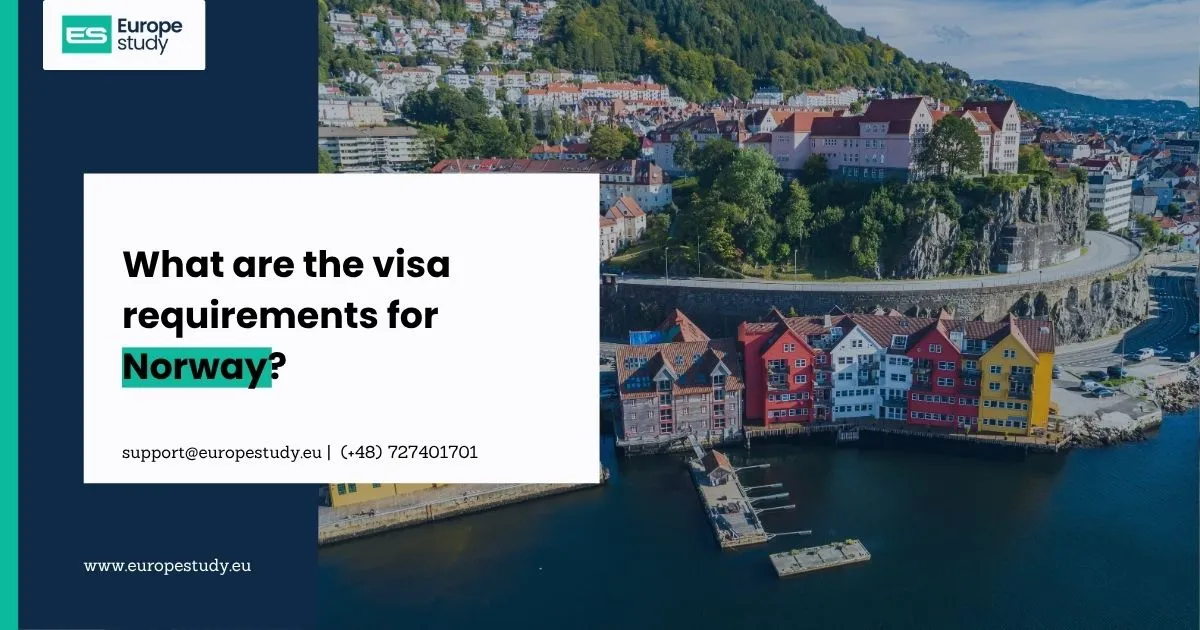
Norway is the second European country that offers genuinely free tuition to all international students at its public universities, including non-EU students from around the world. Norway's major public institutions — the University of Oslo, NTNU (the Norwegian University of Science and Technology) in Trondheim, the University of Bergen, the University of Tromsø (The Arctic University of Norway), the University of Stavanger, and Oslo Metropolitan University (OsloMet) — all charge zero tuition fees.
Like Germany, Norway's only mandatory student payment is a small semester fee of approximately NOK 300 to NOK 600 per semester (roughly €28 to €55), which covers access to student welfare services, healthcare, sports facilities, and the student union.
Norway funds its public universities through its vast sovereign wealth fund — the Government Pension Fund Global — accumulated from decades of oil revenues. This extraordinary national wealth allows Norway to invest in public services, including education, at a level that few countries in the world can match. The free tuition policy is an expression of Norway's deeply held belief that education is a public good and that the best students — regardless of where they come from — deserve access to it.
The important financial consideration for Norway is its cost of living, which is among the highest in Europe. Monthly living costs for a student in Oslo range from approximately €1,100 to €1,500. In Trondheim and Bergen, costs are somewhat lower at approximately €1,000 to €1,300. Students in Tromsø typically face costs similar to Bergen. Norway's cost of living is significantly higher than Germany's, and students need to plan their finances more carefully to make studying in Norway sustainable.
The saving grace of Norway's high cost of living is its equally high wage levels. Norway has no statutory national minimum wage, but sector-specific collective agreements ensure that most entry-level jobs — in hospitality, retail, cleaning, and services — pay between NOK 170 and NOK 220 per hour (approximately €15 to €20). Crucially, Norway imposes no legal limit on the number of hours non-EU students can work on a student residence permit per week. A student working 20 hours per week earns approximately NOK 13,600 to NOK 17,600 per month (€1,240 to €1,600) — enough to cover a substantial portion of monthly living costs and in many cases close to enough to live comfortably without external financial support.
Norway's free education extends to PhD level, and it is worth noting that Norwegian doctoral positions are paid employment contracts — PhD students receive a full salary, typically in the range of NOK 450,000 to NOK 530,000 per year (approximately €41,000 to €48,000), which is one of the most generous doctoral compensation packages in the world. For students planning to pursue research careers, studying in Norway at doctoral level is financially outstanding.
Norway offers a post-study job-seeker permit for international graduates, allowing them to remain in the country for up to 12 months after graduation to find employment. After three years of continuous legal residence in Norway — including study years — non-EU residents become eligible for permanent residency, making Norway one of the most efficient pathways from study to long-term European settlement available to international students.
Finland — Free for EU Students, Fees for Non-EU
Finland is frequently mentioned alongside Germany and Norway in discussions of free European education, but there is an important distinction: Finland's free tuition applies only to EU and EEA students. Non-EU international students have been required to pay tuition fees at Finnish universities since 2017, when Finland changed its policy specifically for students from outside the EU and EEA.
Non-EU students at Finnish universities typically pay tuition fees ranging from approximately €4,000 to €18,000 per year, depending on the institution and programme. Some programmes — particularly in engineering and technology at Aalto University and the University of Helsinki — are at the higher end of this range.
However, Finland significantly offsets this cost for non-EU students through a generous scholarship programme. Most Finnish universities offer automatic tuition fee waivers or scholarship programmes for international students who are admitted to their English-taught programmes. The Finland Scholarship, offered by many Finnish universities, typically covers between 50% and 100% of tuition fees and in some cases includes a living allowance as well. The effective net cost of studying in Finland for a non-EU student who receives a tuition scholarship can be much lower than the headline fee suggests.
Finland's universities — particularly Aalto University, the University of Helsinki, and the University of Tampere — are internationally well-regarded, particularly in technology, design, education sciences, and health. Monthly living costs in Finnish cities range from approximately €800 to €1,100, making Finland moderately priced by Nordic standards.
Sweden — Free for EU Citizens, Tuition Required for Non-EU
Sweden similarly offers free tuition only to EU and EEA citizens at its public universities. Non-EU students pay tuition fees that typically range from SEK 80,000 to SEK 200,000 per year (approximately €7,000 to €17,400), depending on the programme and institution.
Despite these fees, Sweden remains a popular destination for non-EU students for several reasons. First, Sweden has one of the most extensive English-taught programme portfolios in Europe — hundreds of programmes at both undergraduate and postgraduate level are available entirely in English, making it one of the most linguistically accessible non-English-speaking countries for international students. Second, Sweden's universities — particularly KTH Royal Institute of Technology, Lund University, Uppsala University, Chalmers University, and Stockholm University — are internationally very well regarded. Third, Sweden has no legal limit on part-time working hours for non-EU students, meaning students can earn meaningful income during their studies at Swedish wages that are among Europe's highest.
The Swedish Institute Scholarships for Global Professionals (SISGP) — one of Europe's most generous scholarship programmes — covers full tuition, a monthly living allowance, travel costs, and insurance for students from developing countries who demonstrate strong leadership potential. Competition is intense but the award is life-changing. Individual Swedish universities also offer institutional scholarships that partially or fully waive tuition fees for outstanding international applicants.
Austria — Free for EU, Small Fees for Non-EU
Austria's public universities are free for EU and EEA students, with a per-semester student contribution of approximately €363 being the only mandatory payment. For non-EU students, the picture is different — non-EU students typically pay an additional tuition contribution of approximately €726 per semester (on top of the standard student contribution), bringing the total semester cost to approximately €1,089, or roughly €2,178 per year.
This fee is significantly lower than what non-EU students pay in Sweden, Denmark, or Ireland, making Austria a relatively affordable option for non-EU students particularly in German-language programmes. Austria's universities — the University of Vienna, the Medical University of Vienna, TU Wien, and the University of Graz — are internationally respected, particularly in medicine, engineering, and the arts.
It is important to note that non-EU students who can demonstrate extreme financial hardship may in some cases apply for a waiver of the non-EU supplementary fee. Additionally, students from countries with specific bilateral agreements with Austria may have different fee arrangements. Check directly with the university and Austrian immigration authorities for the most current information.
Czech Republic — Free in Czech, Fees in English
The Czech Republic has an interesting two-tier system. Study programmes taught in the Czech language are free for all students — including non-EU international students — at Czech public universities. The cost to the student is the same as for Czech citizens: essentially zero tuition. Students who are willing to learn Czech and study in that language can access free education at Czech public universities, including historic and prestigious institutions like Charles University in Prague (founded in 1348) and Masaryk University in Brno.
However, English-taught programmes at Czech public universities — which are the primary entry route for most non-Czech-speaking international students — do charge tuition fees, typically ranging from approximately €2,000 to €8,000 per year depending on the institution and programme. English-taught medical programmes at Charles University, which are particularly popular with international students from India and the Middle East, typically cost between €12,000 and €15,000 per year.
For students who are motivated to learn Czech, the free tuition pathway is a genuinely exciting opportunity — and Czech is more accessible than many people expect, particularly for students with a Slavic language background. The Czech Republic's living costs are very affordable at approximately €550 to €850 per month, and Prague is one of Europe's most beautiful and culturally rich capital cities.
Greece — Free for EU, Challenging Access for Non-EU
Greece's public universities are free for EU citizens, and the country has historically maintained a broad access philosophy for domestic students. Non-EU students wishing to study in Greece face a more complex situation — formal tuition may be low or subsidised in some contexts, but the availability of English-taught programmes is more limited than in northern or western Europe, and administrative processes can be more complex.
Greece is not typically a primary destination for non-EU international students seeking free education, but it deserves mention as an EU country with very low fees and very affordable living costs (approximately €600 to €900 per month), which makes it a cost-effective option for EU citizens in particular. The University of Athens and Aristotle University of Thessaloniki are the country's largest public universities.
France — Near-Free for Everyone
France is not technically a zero-tuition country for non-EU students, but its public university fees are so low relative to global standards that it deserves to be included in any discussion of affordable European education. Non-EU students at French public universities pay approximately €2,770 per year for Bachelor's programmes and €3,770 per year for Master's programmes — fees set nationally by the French government.
For context: a full three-year Bachelor's degree at a French public university costs a non-EU student approximately €8,310 in total tuition. A two-year Master's costs approximately €7,540. These figures are so low that France sits in a category between genuinely free and the global average for university education costs. The Sorbonne, the University of Lyon, the University of Bordeaux, and hundreds of other French public universities are available at these remarkably low prices.
France's CROUS student housing provides heavily subsidised accommodation across French cities, and the overall monthly cost of living outside Paris — in cities like Lyon, Bordeaux, Toulouse, Strasbourg, Nantes, and Montpellier — is approximately €750 to €1,000 per month. Combined with France's relatively generous part-time work rights (up to 964 hours per year), France represents outstanding overall value for quality of education and cultural experience.
Belgium — Subsidised but Not Free for Non-EU
Belgium's public universities are heavily subsidised for EU students, with fees of approximately €800 to €1,000 per year. Non-EU students pay higher fees — typically €3,000 to €9,000 per year depending on the institution (Ghent University, KU Leuven, Université Libre de Bruxelles, and Vrije Universiteit Brussel are the major options) and the programme. KU Leuven is particularly well regarded internationally and has a large English-taught programme portfolio.
Belgium is not a zero-tuition destination for non-EU students, but it deserves mention for its geographic centrality — located between France, Germany, and the Netherlands — and its strong programmes particularly in European law, international relations, and sciences. Brussels, as the de facto capital of the EU, provides extraordinary professional networking opportunities for students in international affairs, policy, and business.
What Costs Remain When Tuition Is Free?
Understanding the full financial picture of studying in a zero-tuition country like Germany or Norway is essential for realistic planning. Free tuition means you do not pay for the academic instruction itself — but you do still need to fund your living costs, which in Germany and Norway can be significant.
In Germany, total monthly living costs for a student range from approximately €700 to €1,200 depending on the city. The most significant expense is accommodation — private market rents in German cities are high and rising, though student housing through the Studentenwerk is heavily subsidised and significantly cheaper. Monthly student housing costs through the Studentenwerk typically range from €200 to €450 per month. Food costs approximately €200 to €350 per month if you cook at home. Transport is often included in the semester fee. Personal expenses, health insurance, and other costs add approximately €100 to €200 per month.
For the German student visa, non-EU students must demonstrate proof of financial means of at least €11,208 per year (€934 per month) through a blocked account or equivalent financial documentation. This is not a fee paid to the university — it is evidence that you can support yourself during your studies.
In Norway, monthly living costs range from approximately €1,100 to €1,500 depending on the city. The Norwegian government requires non-EU students to demonstrate financial means of approximately NOK 131,520 per year (roughly €12,000) for the student residence permit. Norway's high wages make part-time work a very meaningful financial resource, and many students in Norway effectively cover most or all of their living costs through employment during their studies.
The net financial reality of studying for free in Germany or Norway is that your annual cost — tuition plus living minus part-time earnings — can be remarkably low compared to studying in any other developed-world country. For students who manage their finances carefully and work part-time consistently, studying at a world-class German or Norwegian university can cost less annually than studying at a local university in many developing countries.
Scholarships That Reduce Costs Further
Even in countries where tuition is already free, scholarships can further reduce the financial burden by covering living costs, travel, and health insurance. The most significant scholarship programmes for students seeking free or near-free education in Europe include the DAAD scholarships for Germany, which provide monthly stipends, health insurance, and travel support for international students at German universities. The Norwegian Government Quota Scheme has provided living expense support for students from developing countries and countries in transition. The Erasmus Mundus Joint Master scholarship covers full tuition and provides €1,400 per month regardless of which consortium countries are involved — meaning Erasmus Mundus scholars studying partly in Germany or Norway receive both free tuition and a living allowance. The Swedish Institute SISGP covers full tuition and living costs at Swedish universities, making Sweden effectively free for successful applicants. French government and university scholarships, including the Eiffel Excellence Scholarship Programme, can cover tuition and living costs at French institutions.
Combining the zero-tuition environment of Germany or Norway with a scholarship that covers living costs creates a fully funded study experience that rivals the world's most generous academic funding arrangements — and Europe Study helps students identify and apply for exactly these combinations.
How to Apply to Free-Tuition Universities in Europe
Applying to German and Norwegian public universities follows processes specific to each country. For Germany, international students typically apply through the Uni-Assist platform (which consolidates applications for many German universities), directly through the university's online portal, or in the case of some undergraduate programmes through the national Hochschulstart system. Application deadlines for German universities are typically July 15 for winter semester entry (starting October) and January 15 for summer semester entry (starting April), though these vary by institution and programme.
For Norway, applications to undergraduate programmes go through the Norwegian Universities and Colleges Admission Service (NUCAS/Samordna opptak), while Master's applications are typically made directly through each university's portal. Norwegian university application deadlines for international students are typically in December or January for August intake programmes.
For both Germany and Norway, key application requirements include certified academic transcripts and degree certificates, proof of language proficiency (German or English depending on the programme), a Statement of Purpose or Motivation Letter for Master's applications, a CV, Letters of Recommendation for postgraduate applications, and a valid passport. For Germany, APS academic evaluation may be required for students from China, India, and Vietnam.
The student visa or residence permit application follows after receiving an admission offer. For Germany, this is a national visa (Category D) applied for at the German embassy in your home country, requiring approximately four to six months of lead time. For Norway, this is a student residence permit applied for through the Norwegian Directorate of Immigration (UDI), requiring approximately four to eight weeks of processing time.
Why Europe Study Is Your Best Partner for Free Tuition Study in Europe
The opportunity to study at world-class European universities at zero tuition cost is real, accessible, and genuinely life-changing. But navigating the admissions process, visa requirements, scholarship applications, language preparation, and financial planning across multiple countries simultaneously is genuinely complex — particularly when you are doing it for the first time, from a different country, in a system you are unfamiliar with.
Europe Study (https://europestudy.eu exists to remove that complexity and replace it with clarity, confidence, and expert support. The team at Europe Study has deep, up-to-date knowledge of admission requirements, visa processes, and scholarship opportunities at universities across Germany, Norway, France, and every other major European study destination. Whether you are targeting a free undergraduate programme in Germany, a zero-tuition Master's in Norway, or a near-free programme at a French public university, Europe Study guides you through every step with personalised advice and professional precision.
From identifying the right university and programme for your academic profile, to preparing a compelling Statement of Purpose, to verifying your financial documentation for the visa application, to helping you understand your part-time work rights and your post-study immigration options, Europe Study provides the complete end-to-end support that turns free European university education from an idea into your lived reality.
Visit https://europestudy.eu today and begin your consultation. A world-class European education — at zero or near-zero tuition cost — is waiting for you.
Conclusion
Germany and Norway are the two European countries that charge no tuition fees to international students of any nationality at their public universities. Germany's extensive public university network — including globally ranked institutions like TU Munich, LMU Munich, RWTH Aachen, and Humboldt University Berlin — is entirely free beyond a small semester fee of €100 to €400. Norway's major public universities — including the University of Oslo, NTNU, the University of Bergen, and UiT — are equally free, with only a nominal semester fee of approximately €28 to €55.
Other European countries offer free or very low-cost education primarily for EU and EEA students, with non-EU students paying fees that range from modest to substantial. France is the most notable near-free option for non-EU students, with national public university fees of approximately €2,770 to €3,770 per year. The Czech Republic offers free tuition to non-EU students in Czech-language programmes. Austria, Sweden, Denmark, and Finland are free for EU students but charge fees to non-EU applicants.
The opportunity that Germany and Norway represent — world-class education at zero tuition, in countries with strong economies, high wages, and clear pathways to long-term settlement — is genuinely extraordinary and underused by international students who do not yet know it exists.
Europe Study (https://europestudy.eu) is your trusted partner for accessing this opportunity. With personalised guidance, expert knowledge, and complete application support across every European study destination, Europe Study helps you make the most of one of the world's greatest educational opportunities — free university education in Europe.
Visit https://europestudy.eu today and take the first step toward your free European education.
By the Europe Study Team | europestudy.eu
Frequently Asked Questions
1. Which country in Europe has no tuition fees for international students?
Germany and Norway are the two European countries that charge no tuition fees to international students of any nationality, including non-EU students from around the world, at their public universities. All other European countries either restrict free tuition to EU citizens only or charge non-EU students some level of fees. In Germany, the only payment is a semester fee of approximately €100 to €400 covering student services. In Norway, the semester fee is approximately €28 to €55.
2. Is education really free in Germany for international students?
Yes, genuinely free — zero tuition fees for all students regardless of nationality at German public universities. The only mandatory payment is the semester fee of approximately €100 to €400 per semester, which covers student welfare services, the student union, and in many cities a free public transport pass. This applies to undergraduate, Master's, and PhD programmes at all of Germany's more than 100 public universities, including world-ranked institutions like TU Munich and LMU Munich.
3. Can non-EU students study for free in Norway?
Yes. Norway's public universities charge zero tuition fees to all students — including non-EU students from India, Nigeria, Pakistan, Bangladesh, and every other country. The only payment is a small semester fee of approximately NOK 300 to NOK 600 (€28 to €55) per semester. Norway's living costs are higher than Germany's, but Norway's high wages and no limit on student working hours make part-time work a very effective way to offset living expenses.
4. Is free tuition in Germany only for EU students?
No. Germany's free tuition policy applies to all students at public universities, regardless of nationality. This is one of the most distinctive and generous aspects of German education policy. An international student from India, China, Nigeria, or Brazil pays the same zero tuition as a German citizen at a German public university. Only private universities in Germany charge tuition, and they represent a small minority of institutions.
5. Do I need to speak German to study for free in Germany?
For undergraduate programmes, most courses at German public universities are taught in German, so German language proficiency at B2 to C1 level (TestDaF or DSH) is required to access the full range of free programmes. However, Germany also offers hundreds of English-taught Master's programmes at free public universities — particularly in engineering, IT, natural sciences, and business — where no German is needed for the academic programme itself. Learning basic German improves daily life and career prospects significantly even in English-taught programmes.
6. What are the living costs for students in Germany and Norway?
In Germany, monthly living costs range from approximately €700 to €1,200 depending on the city. Smaller university cities like Freiburg, Jena, and Münster are more affordable. Munich and Frankfurt are more expensive. In Norway, monthly costs range from approximately €1,100 to €1,500. Oslo is the most expensive Norwegian city; Bergen and Trondheim are somewhat lower. In both countries, subsidised student housing is significantly cheaper than private market rents.
7. Are there any hidden costs when studying for free in Europe?
The main costs beyond the semester fee are living expenses — accommodation, food, transport, health insurance, and personal expenses. In Germany, these total approximately €700 to €1,200 per month. In Norway, approximately €1,100 to €1,500 per month. For the student visa or residence permit, you must also demonstrate financial means — approximately €11,208 per year for Germany and NOK 131,520 per year for Norway. Visa application fees also apply. None of these are tuition — but they are real costs that must be planned for.
8. Which free-tuition country in Europe is better — Germany or Norway?
Both are outstanding. Germany is better if your priority is lower living costs, a larger and more diverse economy, stronger industrial job market (especially engineering and IT), and access to hundreds of English-taught Master's programmes at globally ranked institutions. Norway is better if your priority is the fastest PR timeline in Europe (three years), no limit on working hours, an extraordinary natural environment, and a strong focus on marine, energy, and environmental sciences. For most students, Germany offers slightly broader programme choice and lower overall costs, while Norway offers faster settlement pathways.
9. Can I get a scholarship to cover living costs at a free-tuition European university?
Yes. In Germany, the DAAD offers scholarships covering monthly living stipends, health insurance, and travel for international students — effectively making Germany fully funded for recipients. The Erasmus Mundus Joint Master scholarship provides €1,400 per month regardless of the host country, meaning Erasmus Mundus scholars at German or Norwegian universities receive both free tuition and a living allowance. The Norwegian Government Quota Scheme has provided living cost support for students from developing countries. Individual universities also offer stipends and research assistantships.
10. Is France a good option for near-free education in Europe?
Yes. France's public universities charge non-EU students approximately €2,770 per year for Bachelor's programmes and €3,770 per year for Master's — fees set nationally and applicable across France's entire public university network. These are remarkably low by global standards and place France in a near-free category for non-EU students. Combined with subsidised student housing through CROUS, affordable living costs outside Paris, and part-time work rights of up to 964 hours per year, France offers outstanding overall value.
11. Does the Czech Republic offer free tuition to non-EU students?
Partially. Czech public universities offer free tuition to non-EU students in Czech-language programmes — studying in Czech is free for everyone, just as it is for Czech citizens. English-taught programmes at Czech public universities charge fees, typically ranging from €2,000 to €8,000 per year. Students who are motivated to learn Czech and study in that language can access genuinely free education at historic institutions like Charles University in Prague, one of Europe's oldest and most prestigious universities.
12. What is the student visa process for free-tuition countries in Europe?
For Germany, non-EU students apply for a national visa (Category D) at the German embassy or consulate in their home country. The process includes a personal interview, requires proof of financial means via a blocked account or equivalent, and takes approximately six to twelve weeks to process plus appointment waiting time. For Norway, non-EU students apply for a student residence permit online through the Norwegian Directorate of Immigration (UDI), with processing times of four to eight weeks and no interview required. Both processes require a confirmed admission letter from your university.
13. Can I stay in Germany or Norway after graduation and work there?
Yes. Germany provides an 18-month post-study job-seeker visa for graduates of German institutions, during which you can remain in Germany and seek employment. The EU Blue Card allows qualifying professionals to apply for permanent residency in as few as 21 months. Norway provides a post-study job-seeker permit of up to 12 months and offers permanent residency after just three years of continuous legal residence, including study years — one of Europe's shortest PR timelines.
14. Are PhD programmes also free in Germany and Norway?
Yes. PhD programmes at German public universities carry the same zero tuition policy as other programmes. Additionally, many German PhD positions are funded research contracts that include a salary — typically 50% to 100% of a TVöD-E13 academic position salary, which equates to approximately €1,500 to €3,000 per month depending on the contract terms. In Norway, PhD positions are universally paid employment contracts with full salaries of approximately NOK 450,000 to NOK 530,000 per year (€41,000 to €48,000) — one of the world's most generous doctoral compensation packages.
15. How can Europe Study help me study for free in Europe?
Europe Study (https://europestudy.eu) provides comprehensive, personalised support for international students seeking free or near-free education in Europe. The team helps you identify the right university and programme in Germany, Norway, or other affordable European destinations, prepare a compelling Statement of Purpose and complete application file, meet language requirements, navigate the visa process and financial documentation, identify scholarship opportunities to cover living costs, and plan your post-study career and immigration pathway. With Europe Study's expert guidance, you access the extraordinary opportunity of free European education with complete clarity and confidence. Visit europestudy.eu today.