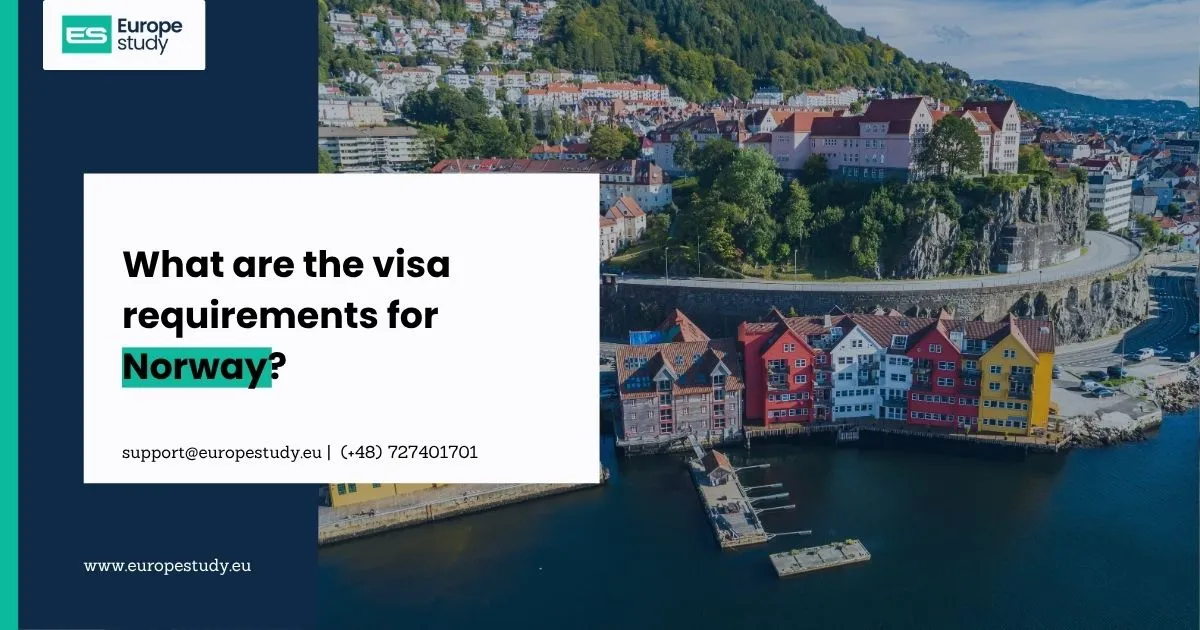
What are the visa requirements for Norway?
What Are the Visa Requirements for Norway? A Complete Europe Study Guide for International Students
Norway has become one of the most attractive study destinations in Northern Europe, known for high-quality universities, world-class research, English-taught programs, breathtaking nature, and a strong focus on innovation, sustainability, and quality of life. From the University of Oslo and the Norwegian University of Science and Technology (NTNU) in Trondheim to the University of Bergen, UiT The Arctic University of Norway, BI Norwegian Business School, and the Norwegian University of Life Sciences (NMBU), Norway offers internationally respected education. A common question students bring to Europe Study is straightforward and very practical: what are the visa requirements for Norway, and how do I apply as an international student?
The honest answer is that the Norwegian visa system is structured, transparent, and well-regulated by the Norwegian Directorate of Immigration (UDI). Depending on your nationality, length of stay, and purpose, you may need a Schengen short-stay visa, a student residence permit (the most common for full-degree students), or in some cases no visa at all. In this detailed guide, Europe Study explains the complete visa requirements for Norway, including eligibility, documents, financial proof, application process, fees, processing time, and practical tips so international students can plan their move to Norway smoothly.
Why International Students Choose Norway
Before looking at visa rules, it helps to understand why Norway has become such a popular study destination.
Norway combines high academic standards with safe, modern cities, breathtaking landscapes, and strong emphasis on equality, sustainability, and innovation. Norwegian universities are well-known for fields like engineering, technology, marine sciences, energy, environmental studies, business, healthcare, and humanities, and offer many English-taught master's and PhD programs.
Although Norway is not a member of the European Union, it is part of the Schengen Area and the European Economic Area (EEA), which means Norwegian student residence permits and degrees offer broad mobility and recognition across Europe.
In addition, Norway offers high quality of life, modern infrastructure, English-friendly cities, post-study work opportunities, and a clear long-term residence pathway for qualified graduates. For students who can manage Norway's relatively high cost of living, it is a strong long-term investment.
Types of Visas and Permits for Norway
To plan effectively, it is important to understand the different types of visas and permits available for students coming to Norway.
Visa-Free Entry
Some nationalities can enter Norway without a visa for short visits up to 90 days within a 180-day period. This may be useful for short language courses, summer schools, or pre-arrival visits, but is not enough for long-term studies.
Schengen Short-Stay (Type C) Visa
For short studies, exchange programs, or summer courses lasting up to 90 days, international students who require a visa to enter Norway typically apply for a Schengen short-stay (Type C) visa. This visa allows travel within all Schengen countries during the validity period but does not allow long-term study.
Student Residence Permit (Long-Stay Study Visa)
For most full-degree international students — those studying bachelor's, master's, MBA, PhD, or longer language and pathway programs — Norway issues a student residence permit (oppholdstillatelse for studier). This is the main long-stay study route for non-EU/EEA students and is processed by the Norwegian Directorate of Immigration (UDI).
The student residence permit usually allows you to stay in Norway for the duration of your studies, with options to renew if needed.
Special Categories
Other categories may apply in specific situations, such as scholarship students under particular government programs, researchers, doctoral candidates with employment contracts, exchange students under EU programs like Erasmus+, and short-term language learners. Each has its own requirements and procedures.
Visa rules can change and may vary based on your nationality and the latest official Norwegian immigration rules. Europe Study strongly recommends checking the most updated information from UDI and the Norwegian embassy or consulate in your country.
Who Needs a Visa or Residence Permit for Norway?
Norway's visa requirements depend on your nationality, the length of your study program, and the purpose of your stay.
Nordic Citizens
Citizens of Nordic countries (Sweden, Denmark, Finland, Iceland) generally do not need a visa or residence permit to study in Norway. They can move freely and only need to register their stay with local authorities for long-term residence.
EU/EEA and Swiss Citizens
EU/EEA and Swiss citizens do not need a visa to enter Norway. However, if they plan to stay longer than 3 months for studies, they must register with the Norwegian police as part of the EU/EEA registration scheme.
Non-EU/EEA Citizens
Non-EU/EEA citizens usually need either a visa or a residence permit to study in Norway, depending on the program length and nationality.
For short stays up to 90 days, some nationalities can enter visa-free, while others must apply for a Schengen Type C visa. For long-term studies, non-EU/EEA students typically must apply for a student residence permit before traveling to Norway.
Eligibility Requirements for a Norwegian Student Residence Permit
While exact requirements may vary, the main eligibility criteria for a Norwegian student residence permit usually include the following.
Admission to a Recognised Educational Institution
You must have a confirmed admission (offer letter) for full-time studies at a recognised Norwegian educational institution, such as a public university, university college, specialised institution, or private institution approved by Norwegian authorities. The program should normally be a full-time degree program leading to a recognised qualification.
Sufficient Financial Means
You must show that you have enough money to support yourself during your studies, including living expenses, accommodation, and any travel costs. UDI sets a specific minimum amount that must usually be available in a designated student deposit account or, in some cases, demonstrated via scholarships, loans, or bank statements. Financial requirements can change and may vary based on the latest official rules.
Accommodation in Norway
You usually need to show that you have a place to live in Norway, either through student housing, private rental, or other accommodation. Universities often help international students with accommodation, although demand can be high.
Health Insurance
You may need to show that you have valid health insurance, depending on your status, the length of your stay, and whether you will be covered by Norway's national insurance scheme upon arrival.
Genuine Purpose of Study
Norwegian authorities want to ensure that you are coming to Norway primarily to study. Your study plan should be consistent with your previous education, career goals, and the country's purpose of admitting international students.
Other Requirements
Additional requirements may include valid passport, completed application form, photographs, application fee payment, and any specific documents requested by UDI or the Norwegian embassy in your country.
Eligibility criteria, financial thresholds, and documentation may vary based on your nationality, the latest UDI rules, and the type of institution. Always check the most updated official requirements.
Documents Typically Required for a Norway Student Residence Permit
Although exact document checklists may vary, the most commonly required documents include:
A valid passport with sufficient validity beyond the end of your planned stay. Completed application form, usually filled online through UDI's portal. Recent passport-size photographs as per the consulate's specifications.
Official admission letter from the Norwegian educational institution confirming your enrolment as a full-time student. Proof of sufficient financial means, such as a deposit in a Norwegian student account, scholarship confirmation, student loan documents, or bank statements showing the required amount, depending on UDI's current rules.
Proof of accommodation in Norway, such as a rental contract, university housing confirmation, or other accommodation documents. Health insurance documentation, where applicable. Tuition fee payment receipt or proof of fee waiver/scholarship.
Educational documents, such as previous diplomas, transcripts, and English proficiency proof, often required at the time of admission and sometimes for the residence permit application. Cover letter or motivation letter outlining your study plan and future intentions, where applicable.
Translation of documents into English or Norwegian may be required if originals are in another language. Some documents may also need to be apostilled, depending on your country.
Application fee payment receipt, in line with UDI's current fees for student residence permits.
Step-by-Step Process to Apply for a Norway Student Residence Permit
To make the process clear, Europe Study breaks down the student residence permit journey into structured steps.
Step 1: Get Admission to a Norwegian University
Your visa process starts with securing admission to a recognised Norwegian university or institution. You generally need an official letter of admission for a full-time degree program before applying for a residence permit.
Step 2: Confirm Acceptance and Arrange Tuition Payment
After receiving admission, accept your offer following the university's instructions. For programs with tuition fees (especially for non-EU/EEA students at many public universities and at private institutions), you may need to pay tuition or part of it as required by the institution.
Step 3: Arrange Proof of Funds
UDI requires evidence that you can support yourself in Norway. Many international students are asked to transfer the required minimum amount into a specific Norwegian student deposit account, which is later released to them in instalments after arrival. Scholarships and student loans from recognised institutions may also be considered.
Step 4: Arrange Accommodation
Try to secure accommodation in Norway before applying for your residence permit. Options include university housing, student associations (like SiO in Oslo), private rentals, and shared apartments. Cities like Oslo, Bergen, Trondheim, and Stavanger have high demand for housing, so early planning is critical.
Step 5: Submit Application Online via UDI
Most student residence permit applications are submitted online through UDI's application portal. You will:
Fill out the application form, upload required documents, pay the application fee, and book an appointment at the Norwegian embassy, consulate, or visa application centre in your country to submit biometrics and original documents.
Step 6: Attend Your Visa Appointment
At your appointment, you submit your application, supporting documents, and biometric data (fingerprints and photo). Make sure to bring all originals, photocopies, and translations as required. Be honest, polite, and well-prepared if interviewed.
Step 7: Wait for the Decision
After submission, your application is processed by UDI, which may take some time depending on the volume of applications, time of year, and complexity of your case. Processing times can be checked via UDI's website.
Step 8: Receive Your Decision and Travel to Norway
If your application is approved, you will receive instructions to collect your visa (if a Type D visa is issued) or a confirmation that your residence permit has been granted. You can then plan your travel to Norway in time for your studies.
Step 9: Register with the Police and Get Your Residence Card
After arrival in Norway, you typically must report to the local police within a defined period to confirm your identity, finalise your residence permit, and receive your residence card. This is an important step to maintain your legal status in Norway.
Step 10: Register with Local Authorities and Settle In
Depending on the length of your stay, you may also need to register with the Norwegian National Registry (Folkeregisteret) and obtain a Norwegian D-number or personal identity number, which is needed for banking, healthcare, and other services.
Processing Time for Norway Student Residence Permits
Processing times for Norway student residence permits can vary based on the embassy, country, and time of year. UDI publishes estimated processing times for student permits on its official website.
In general, Europe Study advises students to apply as early as possible after receiving their admission letter and to allow at least 2 to 3 months before their study start date for processing. During peak periods (around late spring and summer for August/September intake), processing times can be longer.
Fees and Costs for the Norway Student Visa Process
The total cost of applying for a Norway student residence permit includes several components.
The application fee for the student residence permit, payable to UDI. Service fees charged by the embassy or external visa application centre. Document costs, including translation, apostille, and notarisation. Travel costs for visa appointments. Costs for proof of funds, including transferring the required minimum amount to a Norwegian student deposit account.
You should also plan for tuition fees (where applicable), flights, initial accommodation deposits, settlement costs, health insurance, and personal expenses for your first months in Norway. Always check the latest UDI fees and embassy charges before applying.
Tuition Fees in Norway
Tuition fees in Norway depend on your nationality and the type of institution.
EU/EEA, Swiss, and Norwegian Students
EU/EEA, Swiss, and Norwegian students at public universities and university colleges generally do not pay tuition fees for most full-degree programs. Students usually pay only a small semester fee covering student services, transport, and union memberships.
Non-EU/EEA Students
Non-EU/EEA students at Norwegian public universities are now required to pay tuition fees for most bachelor's and master's programs, following changes introduced in recent years. Fees vary by university and program, with some programs being more affordable than others.
PhD programs in Norway are generally tuition-free, and many doctoral candidates are employed under research contracts with salaries and benefits. Private institutions, such as BI Norwegian Business School, charge their own tuition fees regardless of nationality.
Tuition rules and fee structures can change. Europe Study strongly recommends confirming the latest tuition fees with each institution.
Financial Requirements for the Student Residence Permit
A key part of the visa requirements for Norway is proving that you have sufficient funds to support yourself during your studies.
UDI sets a minimum annual amount that students typically need to demonstrate, often in the form of a deposit in a Norwegian student deposit account at a designated bank. In some cases, scholarships, student loans, or bank statements may be accepted, depending on the situation.
The required amount is intended to cover one academic year of living expenses and may be adjusted by Norwegian authorities periodically. Students must usually re-confirm financial means when renewing their residence permits each year.
Financial thresholds can change over time and may vary based on your nationality, family circumstances, and the latest official requirements. Always verify the exact amounts and accepted forms of proof through UDI and the Norwegian embassy in your country.
Health Insurance Requirements
Health insurance is an important consideration for international students in Norway.
EU/EEA students may use the European Health Insurance Card (EHIC) or equivalent national insurance, but they should still check coverage details for their specific situation. Non-EU/EEA students may need to purchase a private health insurance plan that covers them in Norway, especially during the first months before they qualify for the Norwegian National Insurance Scheme (Folketrygden).
Depending on the length of your stay and your status, you may automatically become a member of the National Insurance Scheme once you are registered as a resident in Norway, which gives you access to public healthcare. Europe Studyrecommends checking with your university and UDI for specific health insurance requirements based on your situation.
Working as a Student in Norway
International students with a valid student residence permit in Norway are generally allowed to work part-time alongside their studies, with weekly hour limits during term time, and may be allowed to work more during official holidays and breaks.
For non-EU/EEA students, work may be tied to the conditions of the residence permit, and certain rules apply to types of employment and number of hours per week. Common student jobs include hospitality, retail, customer service, IT support, tutoring, on-campus jobs, and internships, especially in cities like Oslo, Bergen, Trondheim, and Stavanger.
Knowing Norwegian or another Scandinavian language significantly improves job opportunities, particularly in customer-facing roles. However, English-speaking jobs are available in IT, BPO, customer service, hospitality, and global companies operating in Norway.
Work rules and conditions can change, so always check the latest UDI rules before signing employment contracts.
Post-Study Work and Long-Term Stay in Norway
Norway offers some structured options for international students who wish to remain after their studies.
After completing your studies, you may be able to apply for a job-seeker residence permit, which allows you to stay in Norway for a limited time to look for qualified work. Once you secure a qualifying job offer, you can typically transition to a work-based residence permit. Specific salary, qualification, and other thresholds apply, depending on the type of permit.
Over time, qualified employment, continuous residence, language integration, and compliance with legal requirements may support long-term residence and citizenship in Norway, subject to the latest immigration rules. Long-term plans may also benefit from Norway's general support for skilled workers in fields such as engineering, IT, healthcare, energy, and research.
PR and long-term rules can change and may vary based on your status, qualifications, employer, and the latest official immigration rules. Europe Study strongly recommends confirming the most updated rules with UDI.
Practical Tips From Europe Study for the Norway Visa Process
To improve your chances of a smooth Norway student visa or residence permit process, Europe Study suggests the following practical strategies.
Start your visa preparation as soon as you receive your university acceptance letter. Use UDI's official checklists for your specific country and program, rather than relying on generic checklists from unofficial websites. Apply early to avoid clashing with peak intake bottlenecks and high embassy workloads.
Make sure you can clearly meet the financial requirements before applying. Open your Norwegian student deposit account or have your scholarship documents ready well in advance. Carefully prepare and translate documents into English or Norwegian where required, and apostille them according to your country's rules.
Use trusted, secure methods for sending money to your Norwegian student deposit account, and keep clear records of all transactions. Be honest, calm, and well-prepared if you are interviewed, and respond promptly to any additional document requests from UDI or the embassy.
After arrival, register with the police and complete any local registration steps within the required timelines. Get familiar with the rules of your residence permit, including work limits, renewal procedures, and how changes in your studies or work may affect your status.
Common Mistakes to Avoid
Students often face delays or refusals due to avoidable mistakes such as:
Applying too late and clashing with peak season, submitting incomplete or unsigned forms, providing unclear or insufficient financial proof, choosing unrecognised institutions, missing translation or apostille requirements, ignoring local Norwegian rules after arrival, and failing to keep copies of all submitted documents.
A more strategic approach is to treat the Norway student visa as a serious, structured project and to follow every official instruction carefully.
Common Reasons for Norway Student Visa Refusals
Although Norway is generally student-friendly, some applications get refused. Common reasons include:
Insufficient or unclear financial proof, weak academic profile relative to course requirements, doubts about the genuineness of the institution or program, inconsistencies between application documents and personal background, lack of clear connection between the chosen program and previous studies or career goals, missing or improperly authenticated documents, and concerns about the student's intent to return home after studies, where relevant.
Europe Study strongly recommends preparing each document carefully, double-checking financial requirements, and submitting a clear, consistent application that aligns your academic background with your chosen program in Norway.
Final Guidance From Europe Study
So, what are the visa requirements for Norway? In short, you need a recognised Norwegian university admission, proof of sufficient financial means, accommodation in Norway, valid health insurance where applicable, and an appropriate visa or residence permit, usually the student residence permit issued by UDI. Combined with strong academic preparation, careful documentation, and timely application, the Norwegian visa process is well-structured and manageable for international students who plan well.
Whether you choose the University of Oslo, NTNU in Trondheim, the University of Bergen, UiT The Arctic University, BI Norwegian Business School, NMBU, or another Norwegian institution, Norway offers a strong combination of high-quality education, English-taught programs, modern lifestyle, and long-term career and residence opportunities in Europe.
Because admission rules, financial thresholds, visa procedures, work rights, and post-study options can vary by university, course, intake, your nationality, and the latest official requirements, it is always wise to follow current information and rely on experienced education partners. Europe Study supports international students at every step of their Norwegian journey — from selecting the right university and program to admissions, scholarships, visas, accommodation, and pre-departure planning — so that your decision to study in Norway becomes a confident, well-organised step toward a successful global future.
FAQs
Do I need a visa to study in Norway?
It depends on your nationality and the length of your program. Nordic and many EU/EEA citizens do not need a visa, while non-EU/EEA citizens usually need a student residence permit for studies longer than 90 days. Some nationalities also need a Schengen visa for short stays.
What is the main study visa for Norway?
For full-degree international students, the main route is the student residence permit (oppholdstillatelse for studier), issued by UDI. It typically covers the full duration of your studies and may be renewed if needed.
How long does it take to get a Norway student residence permit?
Processing times vary, but applications often take several weeks to a few months. Europe Study recommends applying at least 2 to 3 months before your intended travel date to allow time for processing, especially during peak intake seasons.
How much money do I need to show for a Norway student residence permit?
UDI sets a minimum annual amount students must show, usually as a deposit in a Norwegian student deposit account. The exact amount can change, so always check the latest official rules from UDI before applying.
Is health insurance mandatory for students in Norway?
Health insurance is generally required. EU/EEA students can often use EHIC or equivalent insurance, while non-EU/EEA students may need private health insurance, especially before they qualify for the Norwegian National Insurance Scheme upon registration as residents.
Can I work in Norway on a student residence permit?
Yes. International students with a valid student residence permit can usually work part-time during studies, with weekly hour limits, and may work more during official holidays and breaks. Specific rules and limits may apply, especially for non-EU/EEA students.
Are Norwegian universities free for non-EU students?
No longer in most cases. Non-EU/EEA students at Norwegian public universities are now required to pay tuition fees for most bachelor's and master's programs. PhD programs are generally tuition-free, and EU/EEA students still benefit from tuition-free studies at public universities for many programs.
What documents do I need for a Norway student residence permit?
Common documents include valid passport, application form, photographs, admission letter, proof of funds, accommodation proof, health insurance (where applicable), tuition payment proof, academic records, English/local language proficiency, and application fee payment receipt.
Can I bring my family to Norway as a student?
Family reunification rules may apply, but they often require strong proof of financial means, accommodation, and the relationship. Specific rules can change and may vary based on your status, nationality, and the latest official requirements. Always check UDI for the most updated guidelines.
Can I stay in Norway after my studies?
Yes. Graduates can apply for a job-seeker residence permit and, once they secure a qualifying job offer, transition to a work-based residence permit. Over time, qualified employment, continuous residence, and integration can support long-term residence and citizenship, subject to current rules.
Do I need to know Norwegian to study in Norway?
Not for many programs. English-taught master's, MBA, and PhD programs are common, especially in business, IT, engineering, and sciences. However, learning basic Norwegian is highly recommended for daily life, part-time work, internships, and long-term career or residence plans.
How can Europe Study help me with my Norway student visa?
Europe Study supports international students through every stage of their Norwegian journey, including university selection, admission, scholarships, document preparation, visa guidance, accommodation planning, and pre-departure briefings. The goal is to help you approach your Norway student residence permit application as a well-prepared, confident, and well-informed candidate.