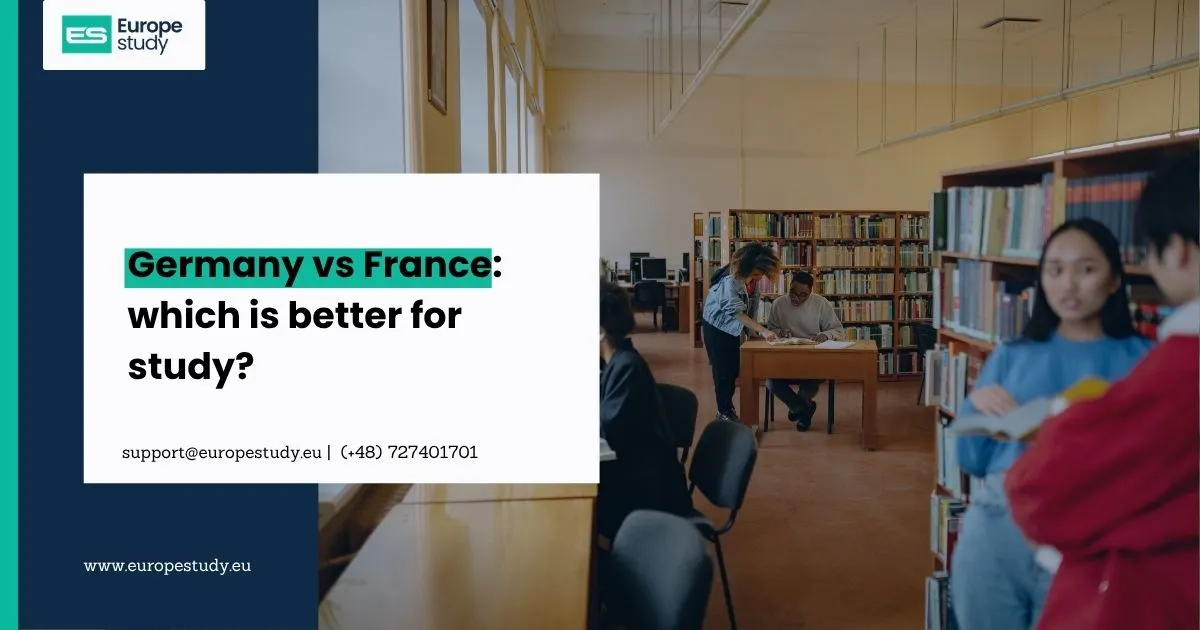
Germany vs France: which is better for study?
Choosing between Germany and France for higher education is a common question among international students. Both countries are among the top study destinations in Europe, offering world-class universities, global exposure, and strong career opportunities. However, the right choice depends on your goals, budget, preferred courses, and future plans.
This detailed comparison will help you understand Germany vs France: which is better for study, covering tuition fees, cost of living, job opportunities, visa benefits, and more.
Why Choose Europe for Higher Education
Europe has become a top destination due to affordable education, English-taught programs, and post-study work opportunities. Countries like Germany and France stand out because of their academic excellence and strong economies.
Germany vs France – Quick Comparison
| Factor | Germany | France |
| Tuition Fees | Mostly free in public universities | €2,500 – €10,000/year |
| Cost of Living | €850 – €1,200/month | €900 – €1,300/month |
| Language | German (English programs available) | French (many English programs) |
| Part-Time Work | 20 hours/week | 20 hours/week |
| Post-Study Work Visa | 18 months | 2 years |
| Top Fields | Engineering, IT, Automotive | Business, Fashion, Hospitality |
Study in Germany – Overview
Germany is known for its tuition-free education system in public universities, making it one of the most affordable study destinations in the world.
Key Benefits:
- No or very low tuition fees
- Strong focus on research and innovation
- High demand for engineers and IT professionals
- Globally recognised degrees
Popular Courses in Germany:
- Engineering
- Computer Science
- Data Science
- Automotive Technology
- Business Management
Study in France – Overview
France is famous for its cultural richness, top business schools, and strong global reputation in arts, fashion, and management.
Key Benefits:
- Globally ranked universities and business schools
- Wide range of English-taught programs
- Strong focus on creativity and innovation
- Attractive post-study work opportunities
Popular Courses in France:
- Business & Management
- Fashion & Design
- Hospitality & Tourism
- Culinary Arts
- International Relations
Tuition Fees Comparison
Germany is ideal for students with a limited budget, while France offers premium education with moderate fees.
- Germany: Public universities are mostly free (semester fee €150–€350)
- France: Tuition ranges from €2,500 to €10,000 per year
Cost of Living Comparison
Both countries have similar living costs, but they vary by city.
- Germany: €850–€1,200/month
- France: €900–€1,300/month
Cities like Paris are more expensive compared to smaller cities.
Language Requirements
Language plays an important role in your study experience.
- Germany: Many programs in English, but German helps in jobs
- France: English programs available, but French is important for daily life and work
Job Opportunities for Students
Both countries allow students to work part-time while studying.
- Work up to 20 hours per week.
- Average wage: €10–€15/hour
Germany: More opportunities in engineering and technical fields
France: Strong opportunities in hospitality, business, and creative industries
Post-Study Work Opportunities
- Germany: 18-month job search visa after graduation
- France: Up to 2 years post-study work visa
France offers slightly longer stay options, but Germany has a stronger job market in technical fields.
Work Visa and PR Opportunities
Both countries provide pathways to long-term residence.
- Germany offers Blue Card options for skilled workers.
- France allows conversion of work permits and offers residency options.
Scholarships and Financial Aid
Both countries offer scholarships to international students.
Germany:
- DAAD Scholarships
- University-specific funding
France:
- Eiffel Excellence Scholarship
- Government and institutional scholarships
Which Country is Better for You?
Choose Germany if you:
- Want low-cost or free education.
- Are interested in engineering or IT
- Prefer strong job opportunities after graduation.
Choose France if you:
- Want to study business, fashion, or hospitality
- Prefer a culturally rich lifestyle.
- Are you looking for longer post-study stay options?
Pros and Cons
Germany Pros:
- Free education
- Strong economy
- High employability
Germany Cons:
- Language barrier
- Competitive admission
France Pros:
- Diverse courses
- Cultural exposure
- Strong global reputation
France Cons:
- Tuition fees
- Higher cost in major cities
Why Both Countries Are Excellent Choices
Germany and France both offer high-quality education, global exposure, and career opportunities. Your decision should depend on your career goals, budget, and preferred lifestyle.
How European Studies Can Help You
Choosing the right country can be confusing, but Europe Study makes it easier.
- Expert counselling
- University selection
- Admission assistance
- Visa guidance
? Apply now: https://europestudy.eu
Frequently Asked Questions
- Which is better for studying, Germany or France?
Germany is better for low-cost education, while France is ideal for business and creative fields. - Is Germany cheaper for students than France?
Yes, Germany offers mostly free education, making it more affordable. - Can I study in English in Germany and France?
Yes, both countries offer many English-taught programs. - Which country has better job opportunities?
Germany has stronger opportunities in engineering and IT, while France excels in business and hospitality. - Is the French language mandatory to study in France?
Not always, but it is helpful for daily life and jobs. - Is Germany good for international students?
Yes, it is one of the most popular destinations due to affordability and quality education. - What is the cost of living in Germany vs France?
Germany: €850–€1,200/month, France: €900–€1,300/month. - Which country offers better scholarships?
Both offer good scholarship opportunities, but Germany offers more public funding options. - Can I stay in France after graduation?
Yes, up to 2 years for job search. - Can I get PR in Germany after studying?
Yes, through work permits and Blue Card options. - Which country is better for an MBA?
France is better due to its top business schools. - Is Germany good for engineering?
Yes, it is one of the best countries for engineering studies. - Are part-time jobs available in both countries?
Yes, students can work 20 hours per week. - Which country is more student-friendly?
Both are student-friendly with good support systems. - Should I choose Germany or France in 2026?
Choose based on your course, budget, and career goals.
Conclusion
When comparing Germany vs France for study, both countries offer excellent opportunities. Germany stands out for affordability and technical education, while France shines in business, culture, and creative fields.
Your final decision should depend on your career goals, budget, and preferred lifestyle. With the right guidance from Europe Study, you can choose the best destination and build a successful future in Europe.